


Internet on the road: Starlink, cellular, and boosters

What do you need it for?
Compare the options →What does staying online draw?
Satellite internet runs 40 to 60 watts continuously. Over a working day that is a real slice of your battery.
Hours online per dayGuides
Before you rely on it for work.

Cellular Data Plans for RV Internet: What Unlimited Really Means
The deprioritization thresholds the carriers publish in their own network management documents, why hotspot data is slower than phone data on the same plan, and how to pick a plan for where you camp.
Cell Coverage for Camping: What the Maps Get Wrong
Carrier coverage maps are propagation models, not measurements. What the FCC's own documentation says they exclude, why they fail hardest exactly where boondockers camp, and how to check a site before you commit to it.

How to Get Internet While Boondocking
Two systems actually work off-grid: cellular where towers reach, and Starlink where they do not. Roam pricing as last checked, real power draw numbers, and why remote workers carry both.
Starlink for RVs: Coverage, Power Draw, and What It Costs
Where Starlink works and where cellular works, current Roam plan prices verified July 18 2026, and the real power draw from Starlink's own spec sheets: 25 to 40W for the Mini, 75 to 100W for the Standard.
Latest
Latest in internet
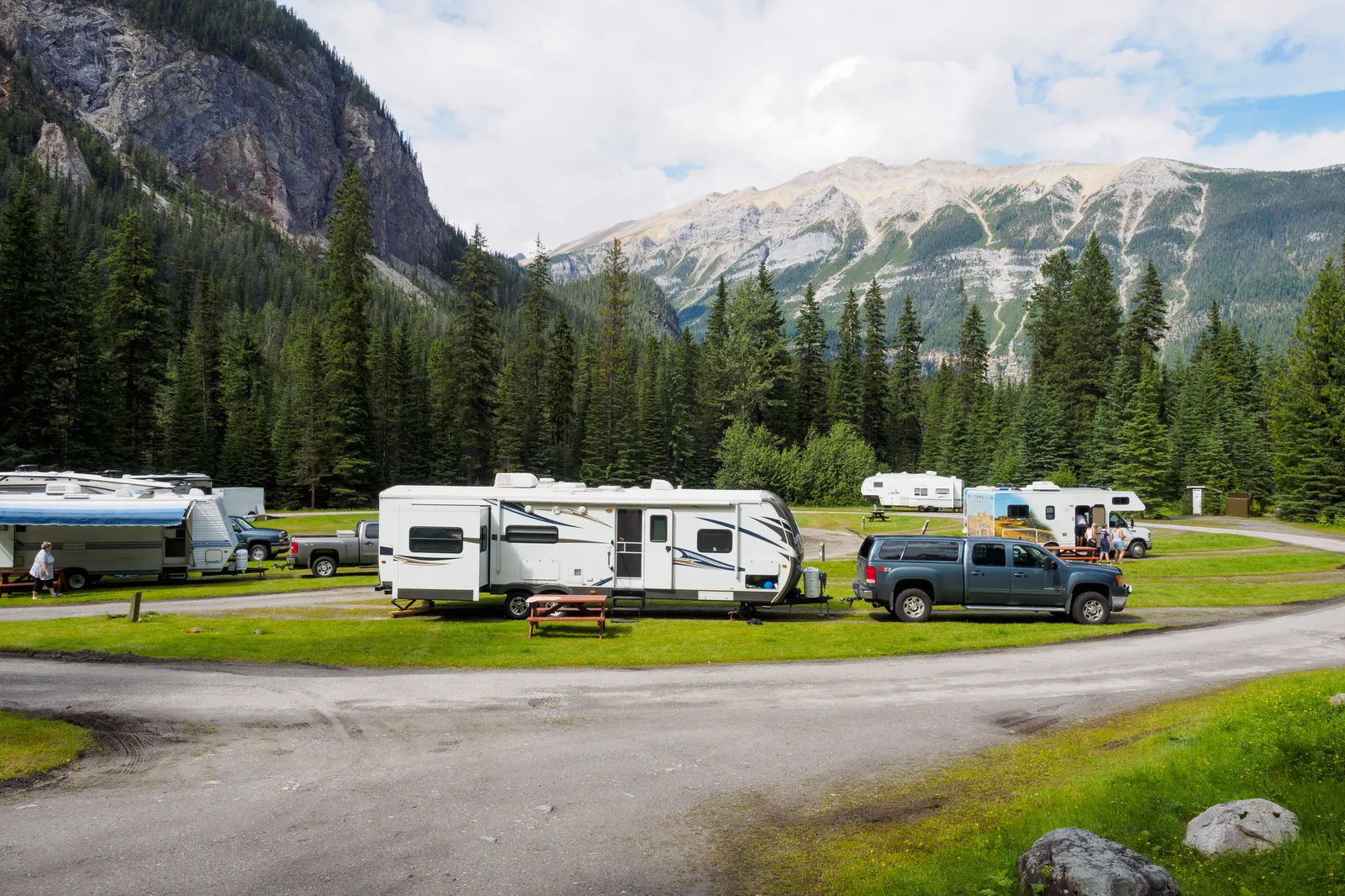
In a BLM developed campground, the federal rule keeps an erected antenna on your vehicle
43 CFR 8365.2-2(c) prohibits constructing, erecting or using an antenna or aerial for radiotelephone, radio or television equipment in a developed BLM recreation site, other than on a vehicle. It never mentions satellite internet, and it does not reach dispersed land.

Four national parks publish exactly where your phone works. Read that page, not the carrier map.
Yosemite lists coverage carrier by carrier. Glacier names the valleys with no reception at all. The NPS says its own guidance beats a provider's coverage map, and one park's page has not been updated since 2018.

Satellite texting on a normal phone: texts only, open sky, and no weather alerts
Apple, Verizon and T-Mobile all publish some form of phone-to-satellite messaging now. It sends a text from a dead zone. It does not carry attachments, and Verizon says it does not carry Wireless Emergency Alerts.
Connectivity questions, answered.
Starlink or cellular?
Most people who depend on it carry both, because they fail in different places. Satellite works where there is no tower at all, which is most of the good camping, but it needs a clear view of the sky and draws real power. Cellular is cheap, low-draw, and instant, and it is useless the moment you are behind a ridge. The redundancy is the strategy, not indecision.
How much power does satellite internet use?
Enough to matter. A consumer dish runs roughly 40 to 60 watts continuously while it is on, so an eight-hour working day is somewhere around 400 watt-hours, which is a solar panel and change on its own. That is a large slice of a modest off-grid system, and it is why connectivity has to go into your power budget rather than be treated as an afterthought.
Are coverage maps accurate?
They are models, not measurements. Carrier maps are generated by predicting propagation across terrain, and terrain is exactly what breaks them. A map showing solid coverage across a valley can be completely wrong 200 feet down a canyon. Treat them as a rough guide, check crowdsourced data where you can, and never plan a Monday meeting from a spot you have not personally tested.
Do cell boosters work?
They amplify a weak signal. They cannot create one. If you have one bar, a good booster can turn that into something usable, and that is a real and useful thing. If you have zero bars and no tower in range, a booster does nothing at all, no matter what it cost. Most disappointment with boosters comes from expecting the second thing.
Which carrier is best for camping?
The answer is regional and it changes, which is why we are not going to declare a winner here. Coverage on public land depends entirely on which carrier built towers in that particular part of that particular state. The people who never lose signal are usually running two carriers on two plans, chosen because they have different coverage holes, not because either is best overall.
Next step
Connectivity is a power problem
A dish running eight hours is roughly another 400 watt-hours a day, which is a panel and change. Fold it into your power budget before you find out the hard way.
Build a power budget →