
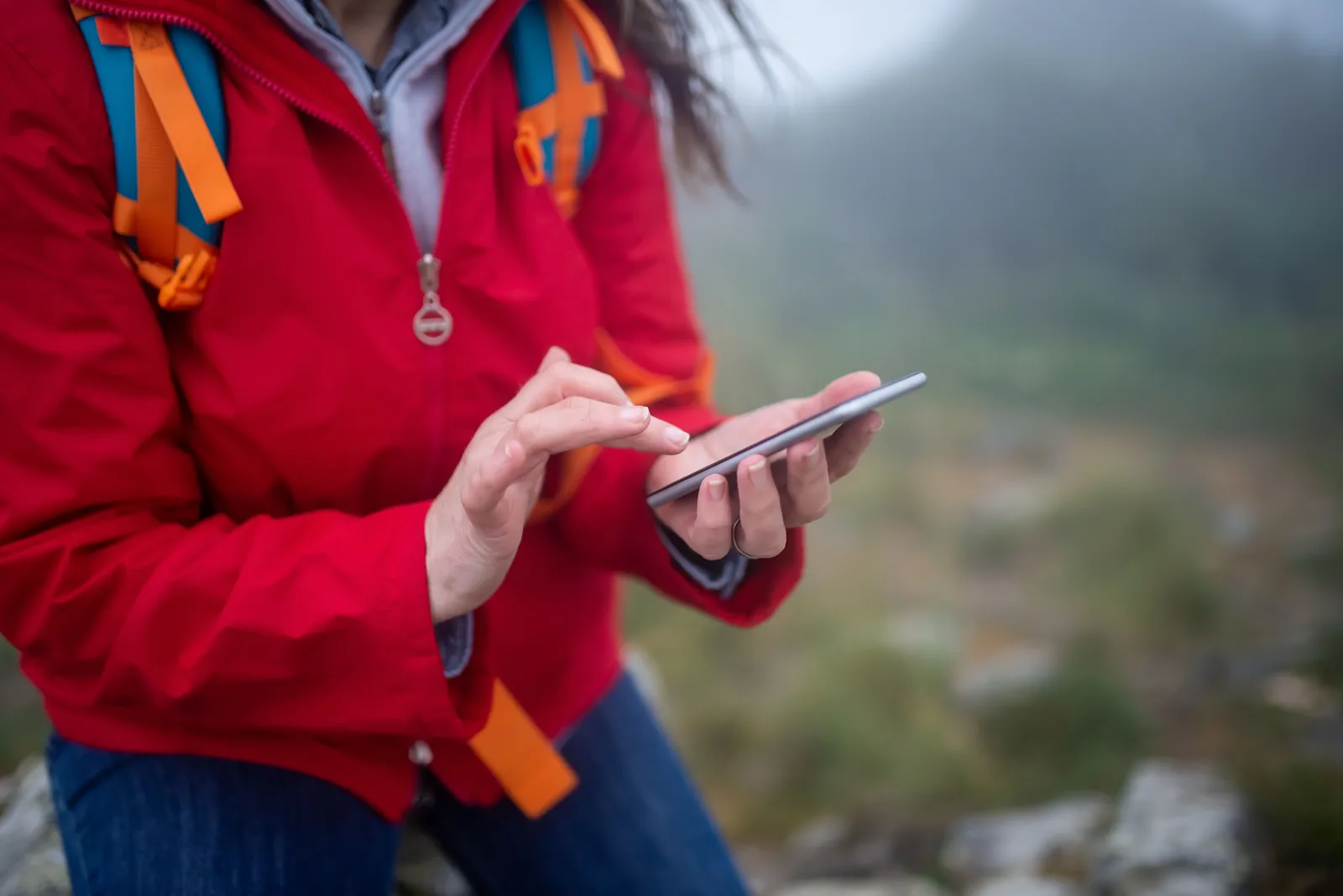
If you want to know whether your phone will work in a national park, the park’s own website is a better source than your carrier’s coverage map, and the National Park Service says so itself.
Its cellular and internet access page, read August 21, 2026, states that provider coverage maps “are for general information purposes and actual coverage may vary” and warns that “service breaks can occur even in areas that appear to be covered on the service provider’s webpage.” The same page says free WiFi exists at more than 140 sites in the park system, and points visitors at the individual park’s Basic Information page.
Four parks do this better than the rest. All four were read August 21, 2026.
Yosemite lists it by carrier
Yosemite’s page is the most useful connectivity page the agency publishes, because it breaks coverage out by network. AT&T: Yosemite Valley and Glacier Point, voice and 4G LTE, “primarily in eastern Yosemite Valley.” T-Mobile: Yosemite Valley only. Verizon: Yosemite Valley, Foresta, Crane Flat, Wawona, and El Portal, where the page calls the coverage “limited and unreliable.”
Tuolumne Meadows is the one to plan around. AT&T’s entry reads “No cell service.” Verizon’s says service “is not reliable.” The page adds that pay phones may not be available and that the nearest reliable phone service is in Lee Vining, outside the park.
Glacier names the dead zones
Glacier’s page does the opposite and lists where nothing works: “Visitors should not expect any reception in Many Glacier, Two Medicine, Logan Pass, the North Fork, Goat Haunt, or anywhere within Glacier’s backcountry.” It goes further than most people expect. “Even along U.S. Hwy 2 on the southern edge of the park, there is no cell reception.” Reception exists from West Glacier up to Apgar Village, and is limited in St. Mary. Public WiFi is at the Apgar and St. Mary visitor centers.
Two smaller units, two honest answers
Great Sand Dunes says Verizon users “generally find a signal in the main visitor area,” meaning the visitor center, campground and dunefield, “as long as you have an open view of the valley floor and Alamosa.” Other carriers may need to be near Alamosa, 40 miles away. There is no WiFi in or near the park.
Natural Bridges is blunter: “As of 2018, no cell service is available within Natural Bridges National Monument.” Service gets unreliable as soon as you turn onto Highway 95 from US 191.
Note that date. The park is telling you its own information is eight years old, which is exactly the sort of thing an app will never tell you. Treat it as a floor, not a current reading.
What to do with this
Before a trip, search the park name plus “connectivity” or “cell service” on nps.gov and read what the park says, then download your maps, your reservation confirmations and the route out before you lose signal.
If your plan depends on being reachable, plan for the gap rather than the coverage. We covered what phone-to-satellite messaging actually does and does not carry in satellite texting on a normal phone. And if you are camping outside the park boundary on public land, which is where the free nights are, assume less coverage than the park reports, not more: our Montana and Colorado pages cover what is out there around Glacier and Great Sand Dunes.
Sources
- Cellular and Internet Access in National Parks (National Park Service)
- Internet Access and Cell Service, Yosemite National Park (National Park Service)
- Cell and WiFi Connectivity, Glacier National Park (National Park Service)
- Mobile Device Connectivity, Great Sand Dunes National Park and Preserve (National Park Service)
- Mobile Device Connectivity, Natural Bridges National Monument (National Park Service)