
- The fine print
- Region 1 order caps camping at 16 consecutive days per site / 32 cumulative days per year on all NF land in Montana. Flathead and Helena-LC pages were read via a text-render proxy of the same fs.usda.gov URLs; re-check before stamping last_verified? They are the same official URLs; keep last_verified but note in QA.
Montana lists 546 federal recreation facilities: 462 by the Forest Service, 56 by BLM, 17 by the Army Corps of Engineers, and 11 across 4 other agencies.
Scale, not a free-camping count: this counts federal recreation facilities of every kind (trailheads, day-use sites, boat ramps, developed campgrounds), and most are not free dispersed camping. Source: Recreation.gov RIDB, retrieved 2026-07-18.
Named areas where free camping is currently allowed
- Flathead National Forest (forest-wide dispersed camping)US Forest Service · Stay limit: 16 days
- Helena-Lewis and Clark National Forest (forest-wide dispersed camping)US Forest Service
- Peninsula Dispersed Campground and Recreation Area (Lolo NF)US Forest Service
- Acton Recreation Area (BLM Billings Field Office)Bureau of Land Management
Dispersed camping on public land is camping, and it is allowed by default on most BLM and forest land within the stay limit. Pulling off a highway to sleep in your vehicle overnight is a different act with different rules. Which one applies to you.
Stay limits are set by the local field office or ranger district and change with fire restrictions. The managing office's current guidance beats this page.
Montana’s free camping runs on one number worth memorizing: 16. A Forest Service Region 1 order caps camping at 16 consecutive days per site, and 32 cumulative days per year, on all national forest land in the state. With 8 national forests and 8,053,643 acres of BLM land on top, that one rule governs an enormous amount of free ground.
Where the free camping is
The national forests are wide open by policy. The Flathead National Forest says dispersed camping is free and permitted almost everywhere on the forest, with the 16-day maximum stated right on its camping page. The Helena-Lewis and Clark National Forest allows dispersed camping generally anywhere except where posted closed, where overnight parking is prohibited, or within 200 feet of a developed road, trail, or facility such as a campground, picnic area, or trailhead. That 200-foot setback is the detail that gets people moved along, so measure it honestly.
If you want something with a little structure, the Lolo National Forest runs the Peninsula Dispersed Campground and Recreation Area, 24 dispersed sites along the Clark Fork River near fishing, rafting, and swimming.
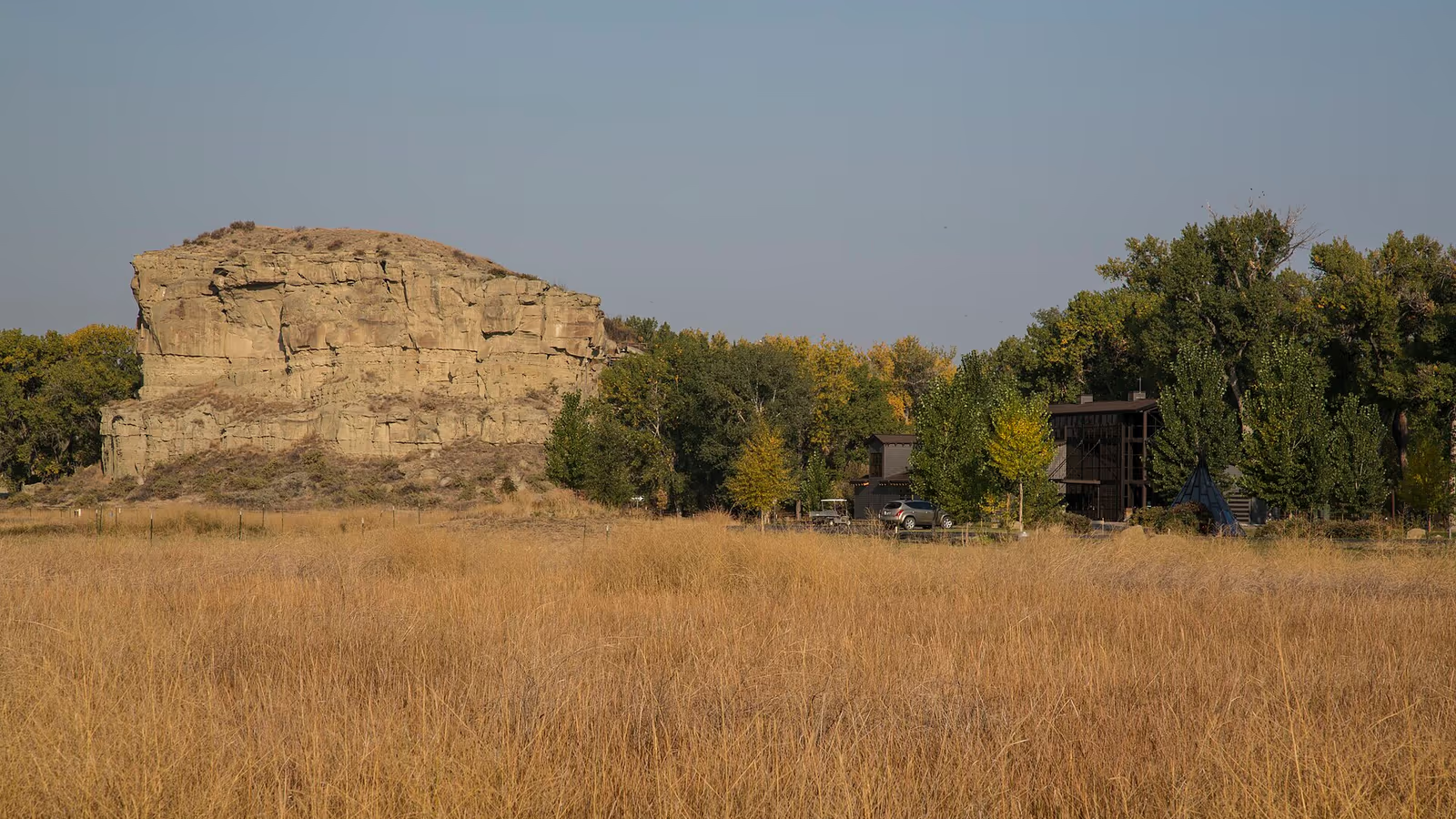
On the BLM side, Acton Recreation Area north of Billings offers dispersed camping along its access road with no fees. Beyond that, Montana’s 8 million BLM acres are a research project, not a rule we can quote: we have not verified field-office stay limits for this page, so ask the office that manages your target area.
The rules that apply everywhere
The 16-and-32 cap is the ceiling on every national forest in the state, but districts can post shorter limits and seasonal closures underneath it. Fire restrictions come and go through the summer and can shut down campfires across whole forests at once, so treat any fire rule as current-conditions-only. Our stay limits guide explains how the day counting works.
How to check before you go
Call the ranger district or BLM field office, pull the Motor Vehicle Use Map for the roads you plan to use, and check the current fire restriction stage. Then trust the posted sign over everything, this page included.