
- The fine print
- Camping per MVUM, up to 300 ft off open roads; Bighorn has posted no-camping corridors.
Wyoming lists 952 federal recreation facilities: 843 by the Forest Service, 101 by BLM, 2 by Fish and Wildlife, and 6 across 4 other agencies.
Scale, not a free-camping count: this counts federal recreation facilities of every kind (trailheads, day-use sites, boat ramps, developed campgrounds), and most are not free dispersed camping. Source: Recreation.gov RIDB, retrieved 2026-07-18.
Named areas where free camping is currently allowed
- Bighorn National ForestUSDA Forest Service
- Bridger-Teton National ForestUSDA Forest Service · Stay limit: 14 days in any 30-day period; 5 days May 1 to Labor Day in designated high-use areas (Jackson, Blackrock, Big Piney, Greys River districts)
- Medicine Bow National Forest and Thunder Basin National GrasslandUSDA Forest Service · Stay limit: 16 days in a 30-day period
- Black Hills National Forest (Wyoming portion, Bearlodge Ranger District)USDA Forest Service · Stay limit: 14 days in any 60-day period
Dispersed camping on public land is camping, and it is allowed by default on most BLM and forest land within the stay limit. Pulling off a highway to sleep in your vehicle overnight is a different act with different rules. Which one applies to you.
Stay limits are set by the local field office or ranger district and change with fire restrictions. The managing office's current guidance beats this page.
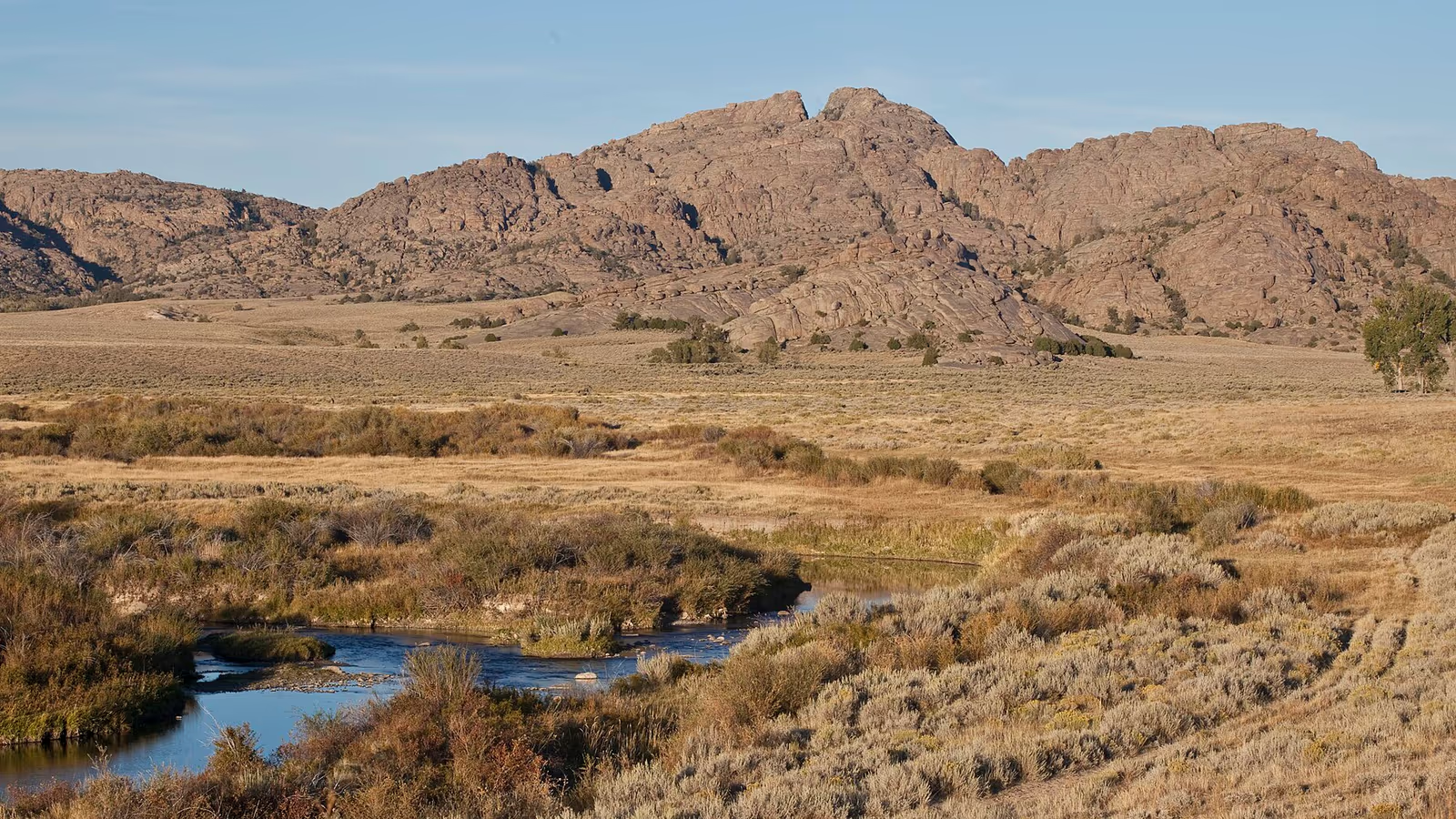
Wyoming has 18,049,385 acres of BLM land and 8 national forests, and free dispersed camping is the norm across most of it. The working rule in the forests we verified: camp where the Motor Vehicle Use Map allows, up to 300 feet off an open road.
Where the free camping is
Five verified forest and grassland areas, each with its own numbers.
The Bighorn, in the north central part of the state, permits camping outside developed campgrounds throughout much of the forest and states you may drive up to 300 feet off an open road to set up. It also posts no-camping corridors along popular stretches, so the roadside signs are part of the rule there, not an afterthought.
The Bridger-Teton, the giant west-side forest below Jackson, allows free dispersed camping in its remote areas with a limit of 14 days in any 30-day period. The exception is seasonal and specific: 5 days from May 1 to Labor Day in designated high-use areas of the Jackson, Blackrock, Big Piney, and Greys River districts. If you are anywhere near Jackson in summer, assume the short clock until a sign or a ranger says otherwise.
In the southeast, the Medicine Bow National Forest and Thunder Basin National Grassland share a limit of 16 days in a 30-day period, a bit more room than the standard 14. And in the northeast corner, the Wyoming portion of the Black Hills National Forest, the Bearlodge Ranger District, allows dispersed camping for a maximum of 14 days in any 60-day period.
The 18 million BLM acres are the bigger inventory, and we have not verified per-field-office stay limits for them, so treat BLM Wyoming as open country you research through the field office, not a place with a number we can quote.
The rules that apply everywhere
The MVUM decides which roads you can use, the 300-foot allowance decides how far off them you can park, and the stay limit decides how long you can sit. Fire restrictions layer on top through the summer. The stay limits guide covers how the different counting windows work.
How to check before you go
Pull the MVUM for your district, check current fire restrictions, and call the ranger district or BLM field office if the stay limit matters to your plan. On the ground, the posted sign beats this page. Crossing borders, the Montana and Colorado pages cover the neighbors.