


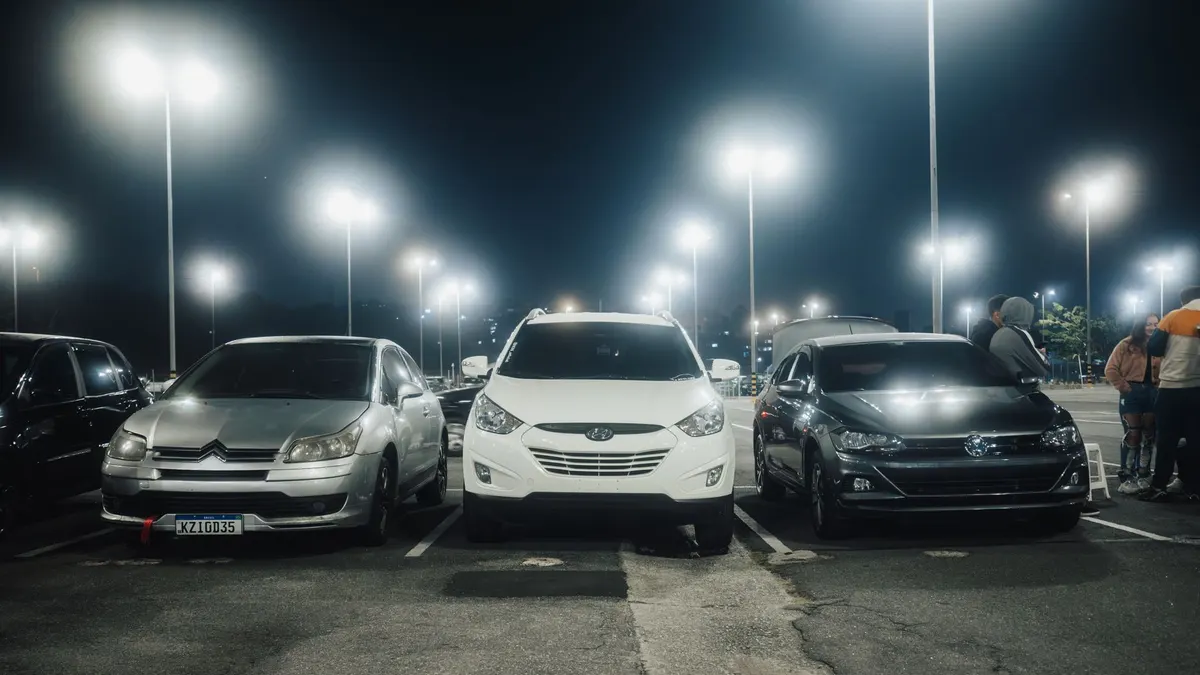
The largest documented risk connected to a rest area is not what happens in the parking lot. It is what happens when a tired driver passes one. That is the entire reason these facilities exist, and it is the reason to weigh a parking rule against your actual condition rather than the other way around. Beyond that, this page tells you who is watching, what the states publish about it, and what we do not know.
What a rest area is, officially
Under the federal rule that governs rest areas built with federal highway money, safety rest areas “should provide facilities reasonably necessary for the comfort, convenience, relaxation, and information needs of the motorist” (23 CFR 752.5). No charge to the public may be made for goods and services there, except telephones and vending machines. That is the whole design intent: a free, public, lit place to stop.
It matters for a practical reason. A rest area is not a campground and it is not a parking lot behind a store. It is state property with a state agency responsible for it, which is why the security posture is published and enforceable in a way that a truck stop’s is not.
Who is actually watching
The honest answer is that it depends on the state, and several states put it in writing.
Washington’s statute directs that “the Washington state patrol shall enforce this section,” meaning the rest area rules, “to the maximum extent practicable.” Utah states that extended stays “are permitted and are monitored by the on-site staff and the Highway Patrol.” Wisconsin’s guidance says a vehicle over the time limit “will be reported to the State Patrol and the procedure for removal will begin.” Florida’s DOT states that there is overnight security at its rest areas, without specifying whether that means sworn officers or contracted guards.
That is a real difference from most free overnight parking. Someone whose job includes this lot will probably drive through it. It is also why the enforcement conversation is the most likely thing to happen to you overnight, more likely than anything else on this page. We cover it in getting woken up at a rest area.
The crime numbers we are not going to give you
Search for rest area safety and you will find confident statistics about assaults, thefts, and which states are worst. We could not verify any of them against an official source: not a DOT publication, not a state patrol report, not a federal dataset. Rest area incidents are not broken out as a category in the crime reporting we could find, and the numbers that circulate appear to trace back to aggregators quoting each other.
So we do not have a crime rate for you, and we are not going to invent one or launder someone else’s. If you were hoping this page would tell you your odds, it cannot. What it can tell you is that the facility is public, usually lit, usually patrolled by a state agency, and used all night by commercial drivers who have nowhere else to be.
The hazards that are actually documented
Carbon monoxide. An internal combustion engine produces carbon monoxide, which has no smell and no color. Exhaust that can reach an occupied space is the mechanism, whether that is a leaking exhaust system, a generator running near a window, or snow packed around a tailpipe. If you idle for heat, keep the exhaust path clear and crack a window on the upwind side. This is a physics problem, not a statistics problem, which is why it belongs on this list even without a number attached.
Generators. Do not run one. Idaho prohibits “plugging vehicles, generators, or other camping devices into any outlets at rest areas,” and beyond the specific rule, a running generator is the single clearest signal that you are camping rather than resting. In most states camping is the thing that is actually prohibited, so this one choice can convert a legal stay into a citation.
Truck traffic. The lot moves all night. Trucks reverse into stalls in the dark with limited visibility, and reefer units cycle on and off. Walking a dog between trucks at 3am is a genuinely bad idea, and parking a car in a truck stall puts you in the path of a maneuver a driver is not expecting. Our truck parking guide covers how the lots are laid out and why the split exists.
Running out of clock. Minnesota allows most motorists 4 hours where posted. Pennsylvania allows 2. If your plan requires 8 hours in a state that allows 3, the plan is the hazard, and the fix is choosing the stop before you are too tired to reroute.
Choices that follow from the rules
Most rest area safety advice is unfalsifiable vibes. Here is the part that follows from things we can actually cite.
Park where the lighting and the foot traffic are, which usually means the car section near the building rather than the far corner. Stay inside the posted limit, because the vehicle that gets reported is the one that overstayed, and an overstay is what starts the removal procedure in states like Wisconsin. Keep everything stowed, since a stay that looks like camping is the one that draws a rule you cannot argue with. Back into the space so you can leave forward without maneuvering half asleep. Note the state and the mile marker before you sleep, because if you do need to call someone at 2am, that is the first thing they will ask.
And read the sign. A statewide rule is a ceiling and an individual site can post something tighter. The sign and the officer standing at your window beat this page.
The trade-off nobody wants to say out loud
There is a real tension between the rules and the reason the rules exist. The Federal Highway Administration describes truck parking shortages as “a national safety concern” and notes that with projected growth in e-commerce and truck traffic, demand will continue to outpace supply. That shortage is why a lot at 11pm can be full, and it is why a driver who is out of hours sometimes ends up on a shoulder or an exit ramp instead.
The same math applies to you at a smaller scale. If you are too tired to drive safely and the posted limit is 2 hours, the answer is not to keep driving. It is to sleep and accept that you may be asked to move on, or to plan the route so the stop lands in a state with a workable limit. Our state-by-state rest area pages show which states those are, and say “not verified” for the ones where no official source states a rule at all.
Sources
- 23 CFR 752.5, Safety rest areas (GPO)
- Florida Department of Transportation, Rest Area Q&A
- Utah Department of Transportation, Rest Areas
- RCW 47.38.020, Washington State Legislature
- Wisconsin Department of Transportation, Rest Area Guidelines and Policies
- Idaho Transportation Department, Rest Areas FAQ
- Federal Highway Administration, Truck Parking (Jason's Law)
- Minnesota Department of Transportation, Rest Area Policy