


Laundry, showers, and mail are the three chores that turn from background tasks into planned trips the moment you stop having an address. None of them is hard. All of them are trips, and the friction of that is one of the main reasons people come off the road. This page is the systems that work, with the postal rules cited to the Domestic Mail Manual so you can check them yourself.
If you are still deciding which state to call home, read domicile first, because the mail decision and the domicile decision are the same decision made twice.
Mail: three tools, different jobs
A commercial mail receiving agency, for your permanent address. USPS defines a CMRA as a business that, in whole or in part, accepts delivery of U.S. Mail on behalf of another person or entity as a business service. That is what the RV mail services are. A separate PS Form 1583 must be completed for each addressee of a private mail box for residential or personal use, and it has to be signed in the presence of the CMRA owner or manager, or a notary public. That is why signing up involves ID and a notary rather than a checkout page.
One detail worth knowing before you pick a service: when a CMRA relationship ends, the business must remail mail intended for the customer for at least 6 months after the termination date. So a service you leave still has an obligation to you for half a year, which is a useful backstop if you switch.
USPS General Delivery, for a stretch on the road. The Domestic Mail Manual is unusually direct about what this is for: general delivery is intended primarily as a temporary means of delivery for transients and customers not permanently located, and for customers who want Post Office box service when boxes are unavailable. That first clause is a fair description of a full-timer.
The rules that matter in practice:
- Each general delivery mailpiece is held for no more than 30 days, although the sender may request a shorter period.
- General delivery is normally available at only one facility under the administration of a Post Office with multiple facilities, and a customer may use only one such location. Before something is mailed, contact the destination Post Office to determine the authorized facility and its ZIP Code.
- You can be required to present suitable identification before mail is handed over, and a postmaster may refuse or restrict general delivery to a customer who cannot present suitable ID, or whose mail volume cannot reasonably be accommodated.
That last one is the practical limit. General Delivery is for a few items over a few weeks, not for running your whole mail stream through a small-town counter.
Premium Forwarding Service Residential, for a long stay in one place. PFS-Residential ships all mail addressed to your primary address to a temporary address by a weekly Priority Mail shipment. Service is available for not less than 2 weeks and not more than 1 year, and it requires a nonrefundable enrollment fee plus a weekly charge for each shipment, submitted on PS Form 8176 at the Post Office serving the primary address. Prices are in USPS Notice 123 and we are not going to reprint numbers we have not verified against the current notice.
The realistic setup for most full-timers: a CMRA as the permanent address, scanning enabled so you can triage, batch forwarding to General Delivery or a campground when you will be somewhere long enough to receive it.
Showers
Your own rig is the first answer, and it is limited by fresh water and by where the grey water goes. A shower is the largest single water draw in a day, which is why the tank math in dump stations and fresh water governs how often you take one at camp rather than in town.
The reliable off-rig categories:
Campgrounds and RV parks. The most predictable option. Guests usually shower free, and some parks sell shower access to non-guests.
Truck stops and travel centers. Open late, easy to reach off the interstate, and set up for people who live in a vehicle. Pricing models differ by chain and location, sometimes bundled with a fuel purchase and sometimes a flat fee. We have not verified current prices at any chain and are not going to print one.
Gyms with multi-location access. A common full-timer solution because the value is the shower and the network, not the equipment. Whether a given membership covers the locations on your route is a question for that chain, and plans change.
Municipal recreation centers, public pools, and some beaches. Often cheap, often a day-use fee, frequently seasonal. Aquatic centers in small towns are underrated and usually have real showers.
State park day-use areas. Some have shower buildings available to day users, many restrict them to registered campers. This varies by state park system and by park, so check that specific park rather than assuming.
The honest version: none of these is available everywhere, and a stretch of remote boondocking means going longer between showers than you would at home. That is a normal part of this and not a problem to solve with gear.
Laundry
Laundry is the chore that most reliably eats a day. Three approaches:
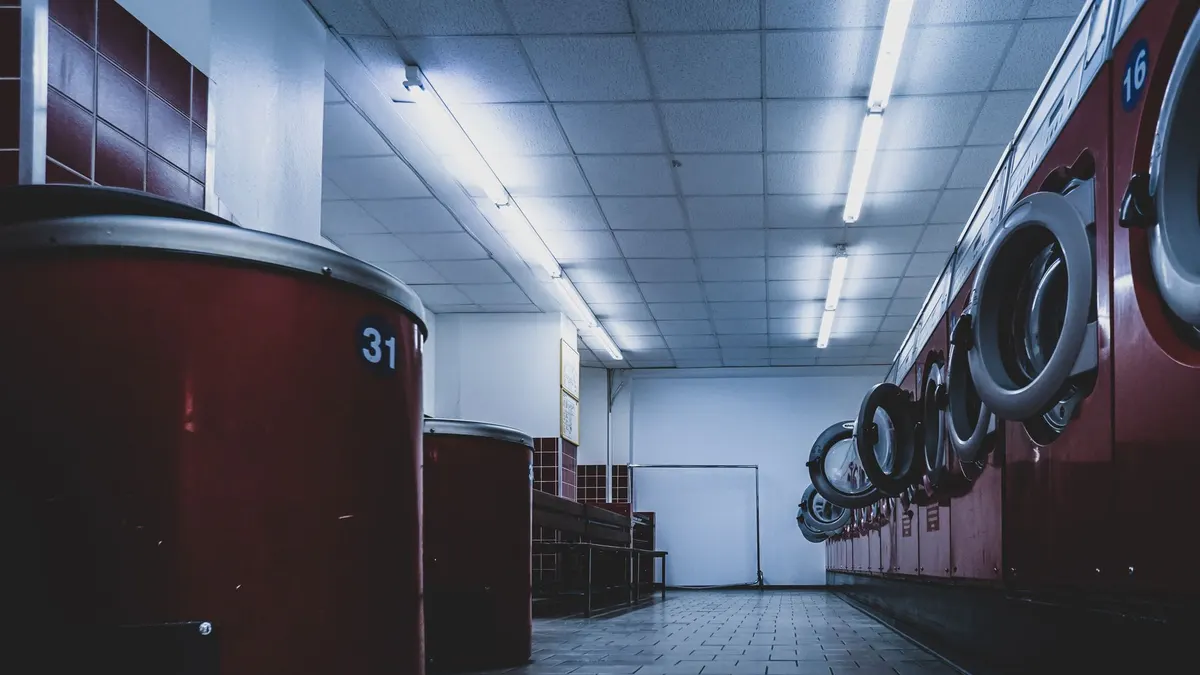
Laundromats. Fastest, because you can run several machines at once. Plan on most of an afternoon including the drive, and do it in the same town trip as groceries, water, propane, and the dump station. One trip, four errands.
RV park machines. Convenient if you are already parked there, usually fewer machines and a queue in the evening. Fine for a load, slow for a backlog.
Hand washing. Works for small items and quick-dry layers. Does not work for towels, sheets, or anything cotton and heavy, and it puts grey water in your tank, which shortens your stay.
The one packing decision that pays off is owning enough clothing to make laundry a two-week problem rather than a five-day problem. That lines up with the 14-day stay limit rhythm on public land, which is already the cadence of your resupply trips.
Building the town day
The pattern that works is simple: one trip, everything at once, roughly every 2 weeks. Dump the tanks, fill fresh water, laundry, groceries, propane, fuel, and whatever mail you had forwarded. Do it on the day you are moving camp anyway, so you pay the fuel once.
What makes new full-timers miserable is doing these as five separate trips over five days because none of them was planned. What makes it manageable is treating the town day as part of the cycle, the same way you treat moving day. More on how the whole cadence fits together in full-time RV living, and what the running total looks like in monthly costs.