

Most first nights out go wrong for four reasons: you arrived after dark, you did not check the road, you ran short of water, or you had no way to call for help. All four are decided before you leave pavement. This page is the pre-departure list, and then the mistakes that end trips early.
One thing up front, and it applies to every page on this site that tells you where you can sleep: the posted sign and the current word from the ranger district or field office beat anything you read here. Rules change by district, by season, and by emergency order. If the sign says no camping and this page says the area generally allows it, the sign wins.
Check 1: is the spot legal, and is the road legal
These are two different questions, and new campers usually only ask the first one.
On BLM land, dispersed camping is generally limited to 14 days within any 28-day period, and after that you have to move, often at least 25 to 30 miles away (BLM camping page, verified July 2026). The same page asks you to camp within 150 feet of designated routes and to stay at least 200 feet from lakes, rivers, and streams.
On national forest land, the road question has teeth. Under 36 CFR 261.13, once a forest has designated its roads, trails, and areas and published a motor vehicle use map, driving anywhere other than in accordance with those designations is prohibited. A two-track that looks obvious on satellite is not open just because it exists. Pull the forest’s motor vehicle use map before you commit.
Stay limits vary a lot between forests and field offices. Our stay limits guide covers the numbers we have verified and says plainly where we have not verified one.
Check 2: fire restrictions for that district, this week
Fire restrictions are the thing that most reliably ruins a plan built two months ago. BLM’s camping guidance says restrictions vary throughout the year and to check current regulations before you go.
The stages matter because they are not the same rule. Under BLM Colorado Northwest District’s published Stage 1 restrictions, campfires are only allowed within designated fire grates in developed campgrounds, and no fires of any type including charcoal are permitted outside developed areas. Under Stage 2, there are no campfires or use of grills or stoves in any location. In both stages, devices using pressurized liquid or gas are exempted, which is why a canister or propane stove is the cooking method that survives most restriction levels.
Restrictions are set locally, so read the order for the specific district you are visiting, not a neighboring one.
Check 3: the road, the tires, and the map you are trusting
Be honest about the vehicle you actually drive. The Park Service’s desert driving guidance points out that rental trucks and SUVs often come with street tires not designed for off-pavement use, and tells you to check the sidewall for an All-Terrain designation rather than assuming the vehicle type covers you. Mojave National Preserve recommends carrying an all-terrain spare, and a second spare on longer routes, because double flats happen.
The same guidance is blunt about navigation: do not rely solely on automated mapping and driver-assisted applications, because they often lead you astray. Coverage is spotty at best out there. Carry a paper map or a downloaded offline map, and treat the routing suggestion as a guess.
If you cannot tell from a satellite image whether a road’s surface and grade suit your rig, that is a phone call to the ranger district, not a thing to discover at dusk. The method for all of this is in how to find your own spot.
Check 4: water, fuel, and a day of margin
Water is what sends most people back to town, not power. EPA’s emergency water planning guidance notes that suggested figures range from 0.5 to 5 gallons per person per day depending on whether food preparation and hygiene are included, and treats 1 gallon per person per day as a plausible planning number for drinking, food preparation, and health-related hygiene.
Read that carefully. One gallon is a survival planning floor, not a number you will enjoy living on. Your first trip is where you learn your real rate, so carry margin: a day or two extra in a separate jug you do not open unless you have to. The full math, including why your grey tank usually fills before your fresh tank empties, is in our water and tanks guide.
Check 5: how you call for help, and who knows you are out there
Cell service is the assumption that fails first. Mojave National Preserve lists a satellite phone or satellite messenger as recommended equipment, alongside something simpler and free: a return plan filed with a friend or relative, so someone knows you are traveling and can alert authorities if you do not come back.
Do the second one even if you skip the first. It costs a text message.
The mistakes that end a trip early
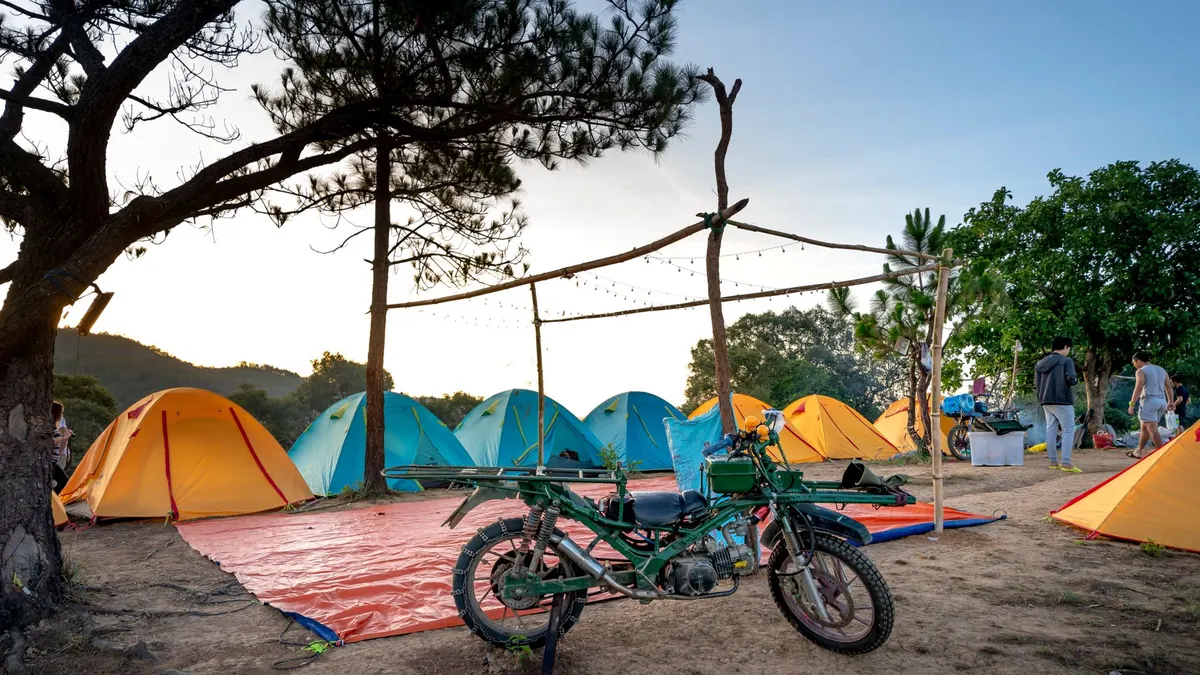
Arriving after dark. This is the big one, and it makes every other problem worse. In the dark you cannot read the surface, find the turnaround, spot the drainage, or back out cleanly when the site turns out wrong. Give yourself at least an hour of daylight at the site.
Running a generator, stove, or heater for warmth in an enclosed space. Carbon monoxide is odorless and colorless and is produced whenever fuel burns, including propane, charcoal, wood, gas, and kerosene. The Park Service reports that roughly 500 people die and 15,000 are made seriously ill from it annually, and that symptoms start as a dull headache before moving to weakness, dizziness, nausea, confusion, and loss of consciousness. A dull headache is easy to sleep through. Run generators outside, well away from windows and vents, never burn charcoal inside, and install a CO alarm outside your sleeping area.
Parking in a low spot. It is flat, it is clear of brush, and it is flat and clear because water moves through it. The National Weather Service puts the numbers at 6 inches of moving water to knock an adult off their feet, 12 inches to float a car or small SUV, and 18 inches to carry away large vehicles, and advises anyone camping in a low-lying area to get to higher ground immediately when water rises. Camp high and dry, not convenient.
No plan for waste. On BLM land, draining sewage or dumping waste from a trailer or vehicle anywhere except a place provided for it is prohibited (43 CFR 8365.1-1). On Forest Service land, failing to dispose of all garbage, including sewage and waste water, either by removing it from the site or depositing it at a place provided for it, is prohibited (36 CFR 261.11). Know where you are dumping before you fill up. See waste and dumping.
Blocking the road with a stuck rig. Blocking, restricting, or otherwise interfering with the use of a road, trail, or gate is prohibited under 36 CFR 261.12. If you do get stuck, getting unstuck covers what actually works.
The unhelpful part
Your first night will probably not be restful. New noises, an unfamiliar leveling job, and the low hum of wondering whether you are allowed to be there all conspire against sleep. That is normal and it passes by about the third trip. Plan a short first outing close to a paved road and a town, not a five-day push into somewhere remote.
We also do not have a verified figure for how often first-time boondockers get stuck, cited, or turned around, and we are not going to invent one. What the agencies do publish is the cost when self-rescue fails: Mojave National Preserve notes third-party tow bills often reach hundreds or thousands of dollars.
When you are ready to pick ground rather than follow someone else’s pin, start with choosing a site, and check the state pages for the rules where you are going.
Sources
- BLM: Camping on Public Lands (dispersed camping rules, stay limits, setbacks)
- 36 CFR 261.11 Sanitation, and 261.12 to 261.13 (roads and motor vehicle use), GPO
- 43 CFR 8365.1-1 Sanitation and 8365.1-2 Occupancy and use (BLM rules of conduct), GPO
- National Park Service: Desert Driving Safety
- Mojave National Preserve: 4WD Vehicles and Off-Pavement Travel Safety
- National Park Service Fire Prevention 52: Carbon Monoxide
- BLM Colorado Northwest District: Stage 1 and Stage 2 Fire Restrictions
- National Weather Service: During a Flood (flood water depths)
- EPA: Planning for an Emergency Drinking Water Supply (water use per capita)