


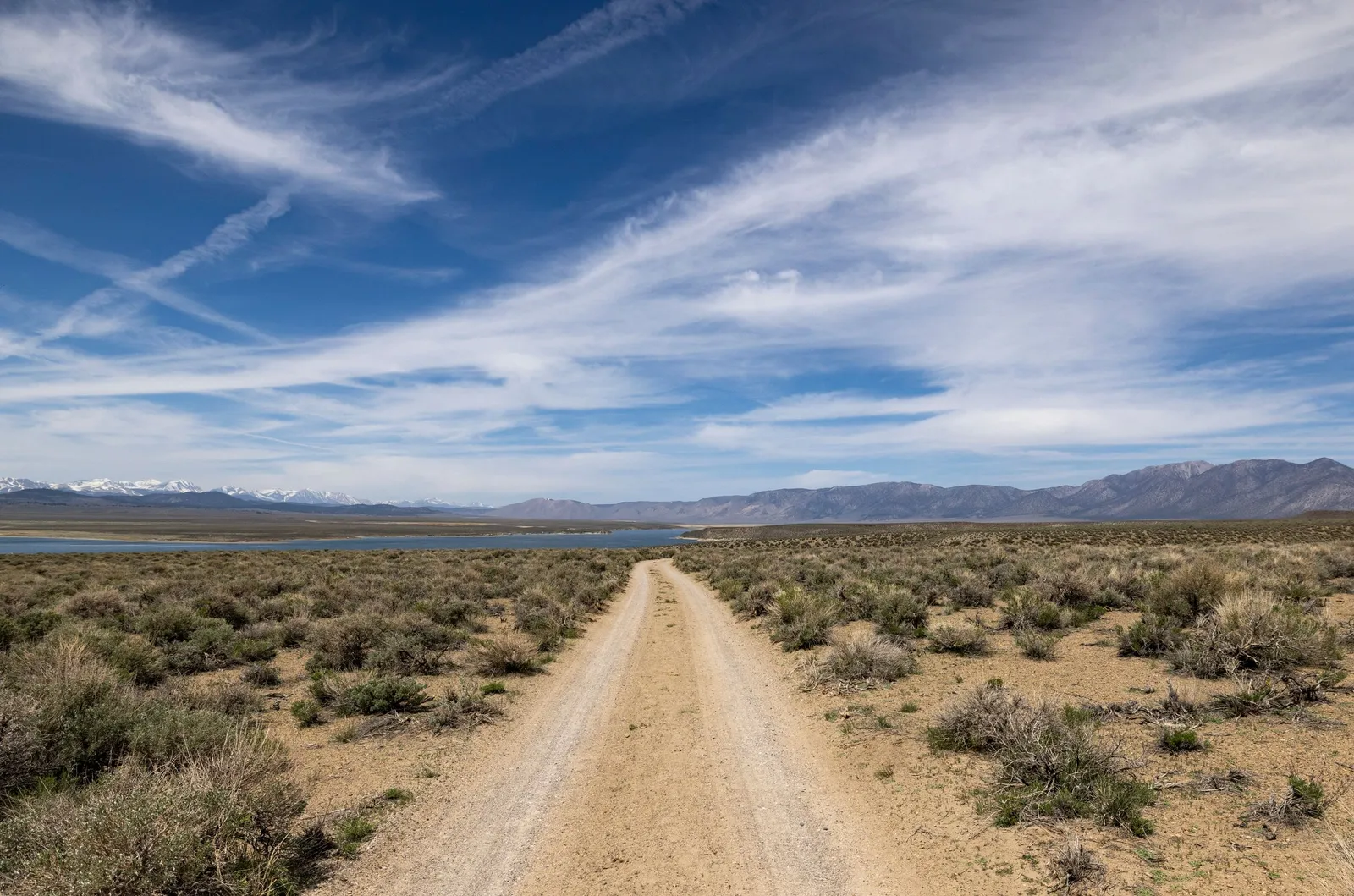
The enforceable rule is that your vehicle stays on designated roads and trails. How far you may pull off that road to camp is set by the field office, and in three Colorado travel management areas the answer is one vehicle-width, not 150 feet.
The BLM’s national camping page, checked August 9, 2026, carries both numbers in different sections, and the section headings do the work. Under core rules: “Vehicles must stay on designated roads and trails unless the area is specifically designated for off-road vehicle use.” Under best practices, labeled recommendations: “Camp within 150 feet of designated routes; avoid creating new tracks.”
Read the ordering. The 150 feet is the outer edge of a suggestion about where to put your camp. It is not a grant of permission to drive 150 feet off a road, and it never was.
What a travel management decision actually says
The BLM’s September 6, 2024 announcement for the Uncompahgre Field Office in western Colorado gives the number in one sentence: “Mechanized vehicles are permitted to pull off designated routes up to one vehicle-width from the edge of a roadway to accommodate parking, dispersed camping, and general recreation.”
One vehicle-width. That is the standard across the Dry Creek, Ridgway and Norwood-Burn Canyon travel management areas.
The same rule then moves in both directions. In one area it is more generous: “In the Dry Creek Travel Management Area, mechanized vehicles are permitted to pull off within 300 feet of a designated route in designated camping areas as indicated by BLM signs or maps.” Twice the number people quote, but only inside areas the BLM has marked. And in another it goes to zero, because the rule closes the Ridgway Travel Management Area to overnight use entirely. There, pull-off distance is not the question you have.
What we are not telling you
We read one field office’s decision this run. We are not claiming other field offices match it, and they are not required to. Travel management is decided unit by unit, which is exactly why a single national number does not exist. The figure that applies to you lives in the plan for the ground you are parked on.
What does carry across, from the BLM’s national page: dispersed camping is “generally limited to 14 days within any 28-day period,” you should “stay at least 200 feet from lakes, rivers, and streams to protect water,” and you should “camp in spots that are already disturbed to protect plants and soil.”
What to do
Default to one vehicle-width off the road, into a pullout that has obviously been used before. That is within the rule almost anywhere and it is what the disturbed-site guidance is asking for. If you want more room than that, go find the field office’s travel management page and look for a stated pull-off distance or a mapped camping area. If you cannot find one, the width of your rig is the safe assumption, not 150 feet.
The posted sign and the field office’s current maps beat any website, including this one. Cutting a fresh track through sagebrush to reach a better view is the most visible thing you can do wrong out there, and it is a common reason good areas stop being open.
For stay limits and the move-on rule, see BLM camping rules. For Colorado specifics, the Colorado free camping page. For the method of finding sites without paying an app, find your own spot.