


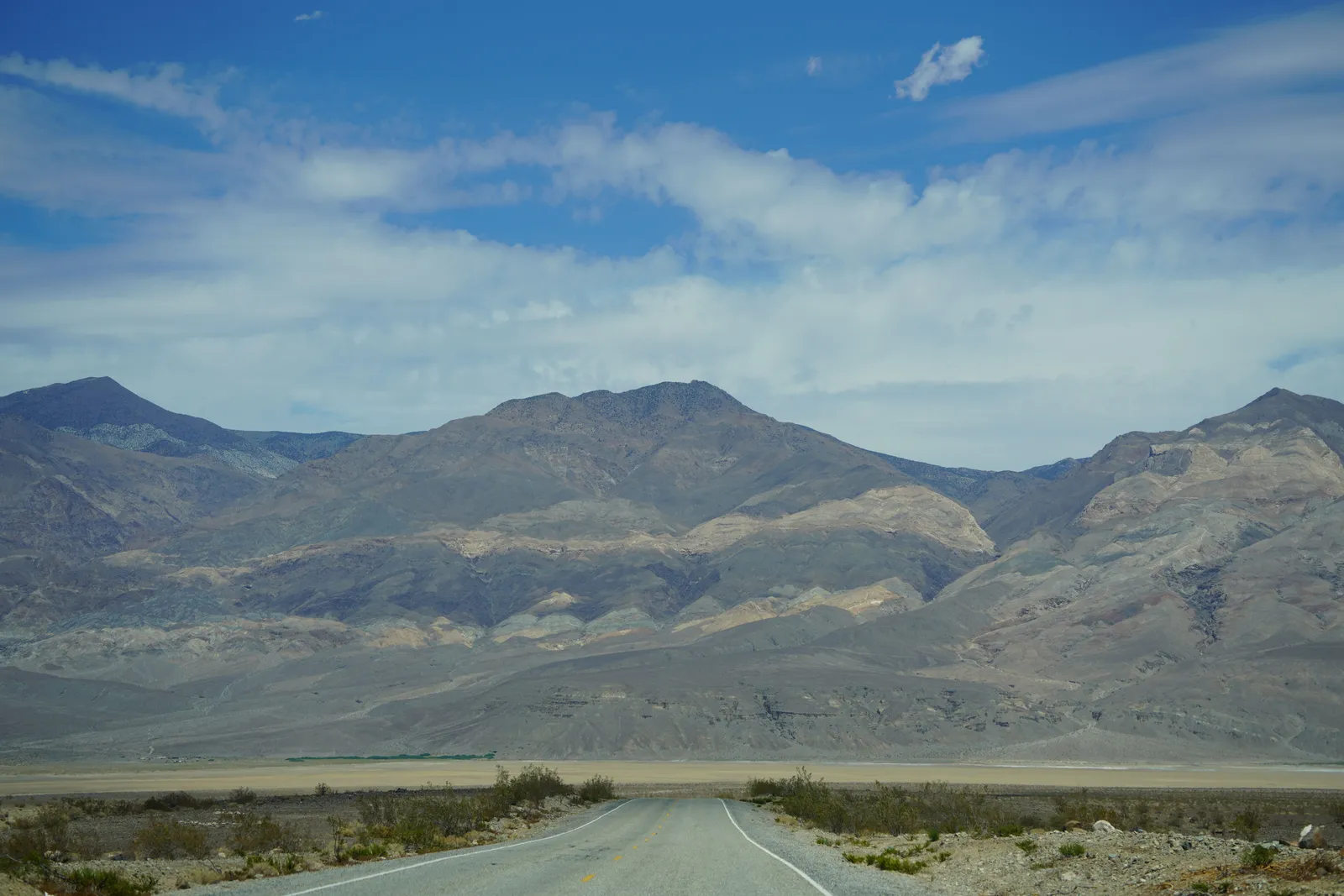
If you are crossing Death Valley on SR-190 this winter, plan the descent off Towne Pass before you are on it. On September 15 the park published an advisory asking commercial drivers to decide in advance whether their vehicle and load belong on that grade, and it put a number behind the request.
On September 9 at about 7:45 p.m. a tractor-trailer’s brakes overheated “while descending about 5,000 feet from Towne Pass,” per the park’s release. The eastbound driver got the tractor detached from the trailer, which kept a load of emulsified asphalt from spilling. The tractor then became fully engulfed in flames.
Then the line that makes this more than one bad night: “Park records show eight tractor-trailer fires on this section of SR-190 in the past three years.”
What the park is and is not saying
Deputy superintendent Abby Wines is quoted in the release: “Commercial truck drivers should know about the steep grade well before they reach Towne Pass. Drivers need to determine whether their vehicle and load are appropriate for this route and, if necessary, choose an alternate route.”
That is addressed to commercial drivers. We looked for an RV or trailer restriction on SR-190 and did not find one, so we are not going to imply there is one. There is no published length limit, no weight limit, and no required stop.
What the park does publish for everyone is on its safety page, last updated November 14, 2024: “Most deaths in Death Valley are caused by single vehicle rollover accidents on the park’s long, winding roads. Follow all posted speed limits, shift to low gear on steep downhill grades, and always your wear seatbelt!” (The word order in that last clause is the park’s, not ours.)
Why the number should still interest you
Eight tractor-trailer fires in three years is a count for the heaviest vehicles on that road, and a loaded motorhome is not a loaded tractor-trailer. But the mechanism does not care about the category. Riding the brakes down a long grade heats the pads until they stop converting speed into friction, and by the time you feel that happening you have already lost most of your options. A 30-foot travel trailer behind a half-ton on a 5,000-foot descent is doing the same arithmetic with smaller numbers.
Come down in a gear low enough that the engine holds your speed and the brakes are for corners. Pick that gear at the top, not halfway down.
Two more things on that stretch
The park’s road conditions page, updated September 18, 2026, notes that Lower Wildrose Road, which it describes as connecting Wildrose to Panamint Valley, does not allow vehicles longer than 25 feet, and that the road is narrow with soft shoulders. That is the one published vehicle-length limit we found in the park.
The same page is where the seasonal changes land. Titus Canyon Road closes for repairs from October 1 through September 30, 2027, and three of the park’s campgrounds are still on seasonal closure. If you are building a winter loop through the park, our California free camping page covers the public land on either side of it.
Check conditions the morning you drive. The posted sign and the ranger at the entrance beat any website, this one included.
Sources
- National Park Service, Death Valley National Park Urges Commercial Drivers to Use Caution on Towne Pass, September 15, 2026, read September 22, 2026
- National Park Service, Death Valley National Park, Safety (page last updated November 14, 2024), read September 22, 2026
- National Park Service, Death Valley National Park, Alerts and Conditions (page last updated September 18, 2026), read September 22, 2026