- The fine print
- California Campfire Permit (free) required for any fire/stove outside developed campgrounds. Alabama Hills now requires a free permit at designated sites, so not listed as open dispersed camping.
California lists 1,930 federal recreation facilities: 1,759 by the Forest Service, 63 by the Park Service, 54 by BLM, and 54 across 9 other agencies.
Scale, not a free-camping count: this counts federal recreation facilities of every kind (trailheads, day-use sites, boat ramps, developed campgrounds), and most are not free dispersed camping. Source: Recreation.gov RIDB, retrieved 2026-07-18.
Named areas where free camping is currently allowed
- Inyo National ForestUSDA Forest Service
- Shasta-Trinity National ForestUSDA Forest Service
- Stanislaus National ForestUSDA Forest Service · Stay limit: 21 cumulative days per ranger district per calendar year
- BLM public lands in California (statewide)Bureau of Land Management · Stay limit: 14 days within any 28 consecutive days; Bishop Field Office 14 days per year
Dispersed camping on public land is camping, and it is allowed by default on most BLM and forest land within the stay limit. Pulling off a highway to sleep in your vehicle overnight is a different act with different rules. Which one applies to you.
Stay limits are set by the local field office or ranger district and change with fire restrictions. The managing office's current guidance beats this page.
California’s BLM rule is one sentence worth memorizing: dispersed camping is allowed on public lands in California for no more than 14 days within any period of 28 consecutive days. That is BLM California’s own wording, verified July 2026, and it covers just under 15 million acres. One published exception: the Bishop Field Office, on the east side of the Sierra, allows only 14 days per year.
Where the free camping is
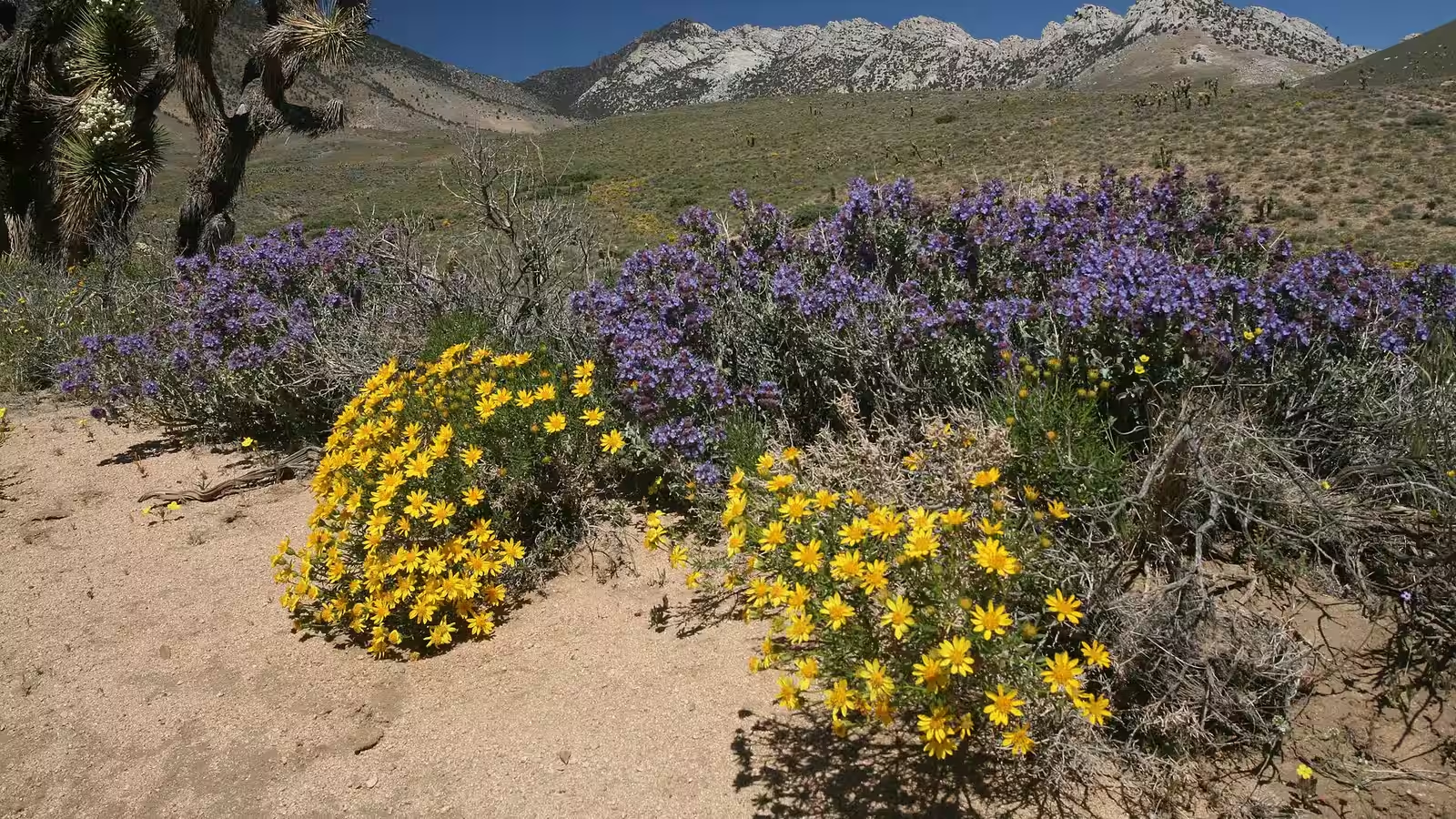
Beyond BLM ground, California has 19 national forests, and the ones we have verified are open by default rather than closed. The Inyo National Forest describes dispersed camping as something done anywhere on the forest outside a developed campground. The Shasta-Trinity says almost all of the forest is open to undeveloped camping. Neither page states a forest-wide day limit, so we are not printing one for them; the district sets it.
The Stanislaus National Forest does publish a number, and it is an unusual one: 21 cumulative days per ranger district per calendar year. That is an annual budget, not a per-visit clock. Burn through it in July and that district is done for the year.
One correction to older advice: the Alabama Hills now require a free permit at designated sites. It is still cheap, but it is no longer open dispersed camping, so it is not listed here as such.
The fire permit is not optional
Any campfire, barbecue, or camp stove outside a developed campground in California requires a California Campfire Permit. It is free and takes minutes online. Seasonal fire restrictions can then prohibit fires entirely regardless of your permit, so check the forest’s or field office’s current restrictions in the week you travel. And wherever a posted sign disagrees with this page, the sign wins.
How to check before you go
Confirm three things with the managing office: the stay limit where the web page is silent, current fire restrictions, and road conditions on the route in. Forest visitors should pull the Motor Vehicle Use Map for legal roads. For the mechanics behind the 14-day rule and how rangers count it, see our BLM camping rules guide and stay limits guide.