

Fire restrictions are set locally, they change week to week through fire season, and the only current answer comes from the agency that manages the exact ground you are standing on. There is no national fire restriction. One forest can be closed to campfires while the district 40 miles down the road is wide open, and an order can be signed the morning after you arrive. So this page will not tell you what today’s restriction is. Any page that does is stale by the time you read it. What follows is the part that stays true: how the system is built, what an order can legally ban, and how to get the current answer in about ten minutes.
Find out who manages the ground first
This is the step people skip, and it is why they check the wrong page and get a confident wrong answer.
Public land is a patchwork. A single dirt road can cross Forest Service land, BLM land, state trust land, and private inholdings inside of five miles, and each has a different fire authority issuing different orders on different days. Before you look up a restriction, know whether you are on a national forest, a BLM field office, a park unit, or state land. Our public land types guide covers how to tell them apart.
Get this wrong and everything after it is wrong. Reading your state’s forestry page while sitting on BLM land tells you nothing about the order you are subject to.
What the stages mean, and what they do not
Stage 1, Stage 2, and Stage 3 are shorthand that fire managers across many western states use in roughly the same way. Stage 1 usually restricts campfires to developed sites and cuts back on equipment use. Stage 2 usually removes the developed-site exemption and bans campfires outright. Stage 3 is a full area closure, meaning you cannot be there at all.
Here is the caveat that matters more than the pattern: the stages are not federally standardized. No regulation defines them. Each agency, geographic area coordination group, and state writes its own order, and the label is a summary someone attached to it afterward.
Utah’s interagency fire release from June 2025 shows the seams. It put six BLM districts, three national forests, and eight park units into Stage 1 on the same day, excluded three other national forests entirely, and noted that Zion National Park’s Watchman Campground fell under what it called “a unique Stage 2 restriction.” The release says it directly: fire restrictions can vary among different agencies, and you should always verify current restrictions with the relevant land management agency before your visit. A BLM Central Coast Field Office order from May 2025 was not stage-labeled at all, and included a recreational target shooting ban that a typical Stage 1 would not.
Treat the stage number as a hint about severity. Read the order text for the rules.
What an order can actually prohibit
On Forest Service land the mechanism is a forest order issued under 36 CFR 261 Subpart B. Under 36 CFR 261.50(a), the Forest Supervisor (among others) may issue orders that close an area to entry or restrict its use by applying any or all of the prohibitions authorized in that subpart. The fire menu is 36 CFR 261.52, and when an order invokes them, these are prohibited:
- Building, maintaining, attending or using a fire, campfire, or stove fire
- Using an explosive
- Smoking, or smoking except within an enclosed vehicle or building, a developed recreation site, or while stopped in an area at least three feet in diameter cleared of flammable material
- Going into or being upon an area
- Possessing, discharging or using any kind of firework or other pyrotechnic device
- Entering an area without a firefighting tool prescribed by the order
- Operating an internal combustion engine
- Welding, or operating an acetylene or other torch with open flame
- Operating any internal or external combustion engine without a working spark arrester
- Violating a state burning law specified in the order
Note the two that catch campers off guard. “Operating an internal combustion engine” is the clause that reaches your generator and your chainsaw, not just your truck. The Central Coast order spelled that out, banning internal combustion engine use off designated roads and trails and naming chainsaws, generators, and ATVs. And “going into or being upon an area” is the whole legal basis of a closure: that is what Stage 3 is underneath the label.
On BLM land the parallel is a fire prevention order under 43 CFR 9212.2, which lets an authorized officer close entry to or restrict uses of designated public lands. Separately, 43 CFR 9212.1 carries prohibitions that apply year round with no order at all, including leaving a fire without extinguishing it and building a campfire without clearing flammable material around it. BLM’s regulatory definition of a campfire is broad: a controlled fire out of doors used for cooking, branding, personal warmth, lighting, ceremonial or esthetic purposes.
The stove exemption is real, and it is per order
In many restrictions a stove with a shut-off valve stays legal when an open fire does not. Do not carry that as a rule. 36 CFR 261.52(a) explicitly lets an order prohibit a “stove fire,” so the authority to ban your stove exists. Whether it is banned depends on what your order says.
Two examples of how the clause gets written, both from 2025 and both long since superseded, quoted only to show the shape:
- BLM Green River District (Utah) exempted “use of devices fueled by petroleum or liquid petroleum gas with a shut-off valve,” usable only in an area barren or cleared of overhead and surrounding flammable materials within 3 feet.
- BLM Central Coast (California) allowed portable stoves and lanterns with shut-off valves using gas, jellied petroleum, or pressurized liquid fuel, but only with a valid California campfire permit.
Same agency, same year, different conditions, and one required a state permit. Find the exemptions paragraph on your order and read it.
How to check, in order
- The unit’s own alerts page. Go to the website for the specific national forest or the specific BLM district or field office and find its alerts and notices. Not the agency’s national page. The unit page.
- The state interagency fire information site. Most western states run one jointly with the federal agencies, and it aggregates orders and maps across jurisdictions. Utah’s official release, for example, directs readers to UtahFireInfo.gov for orders and maps.
- The geographic area coordination center. The GACC sites at gacc.nifc.gov host restriction documents by dispatch area, which is useful when a restriction spans several units.
- Call the ranger district or field office. This is not a fallback, it is what the regulation itself recommends: 36 CFR 261.50(f) says anyone wanting to use part of the National Forest System should contact the Forest Supervisor or District Ranger to find out what restrictions apply.
- Read the posted sign and the trailhead board. 36 CFR 261.51 requires each prohibition to be displayed in locations and a manner reasonably calculated to bring it to the public’s attention. 43 CFR 9212.2(b) requires a BLM fire order to be posted in the local office and near the restricted area where it can readily be seen.
One thing worth knowing about step 5: the sign is not a courtesy, it is the legal notice, and it wins. A posted restriction and the district’s current order beat this website, beat any app, and beat the printout you made last week. Note also that the fire-prevention subpart at 43 CFR 9212.2(b) does not require BLM to publish a fire order online anywhere. The online-posting requirement at 43 CFR 8364.1(c)(4) applies to temporary closure orders under that separate subpart. Which is exactly why you still stop and read the board.
The national fire center at nifc.gov coordinates wildland fire nationally and is not where unit-level restrictions live. Do not read a quiet national map as a green light.
Say the unhelpful part
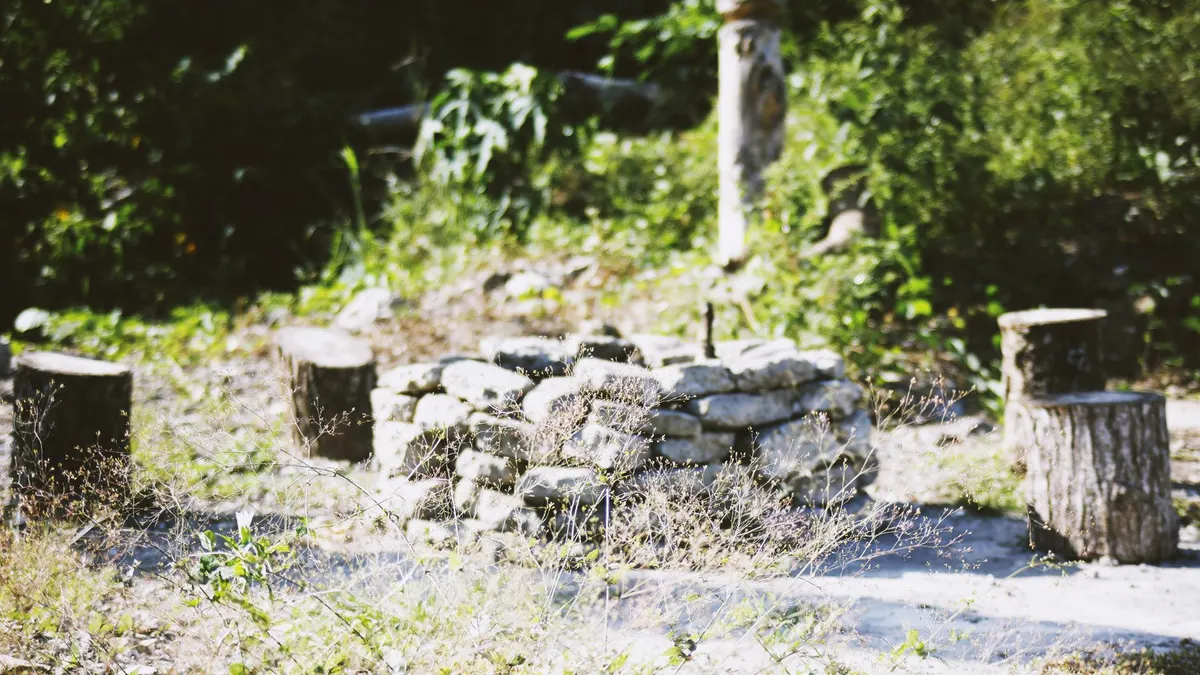
A fire ring existing does not make a fire legal. It means someone had a fire there at some point. The Green River order banned fires “including fires in developed campgrounds and non-designated sites,” rings and all.
A restriction can be issued the morning after you arrive. The Green River order ran “until rescinded,” with no end date, and 43 CFR 9212.2(b)(2) only requires an order to specify the time it applies, not to carry an expiration you can plan around. If you are staying more than a night or two, check again.
“It rained yesterday” is not a defense. Neither is “the ring was already here,” “the campground host didn’t say anything,” or a screenshot from three days ago. Intent is generally not an element of a Part 261 offense (36 CFR 261.1(c)).
The penalty numbers are real. Forest Service: not more than $500 or six months (36 CFR 261.1b). BLM: 43 CFR 9212.4 sets up to $1,000 or 12 months, while the field orders themselves cite up to $100,000 and 12 months as a Class A misdemeanor. Both 2025 orders reviewed here also put suppression and damage costs on whoever started it, and that number has no cap.
We do not publish current restriction status on our state-by-state free camping pages, for the same reason this page does not: it would be wrong within days. Those pages carry verified stay limits and the managing office to call. For the camping rules a fire order sits on top of, see BLM camping rules and national forest camping rules. Seasonal closures are a separate mechanism worth reading alongside this one, and if you are still working out where dispersed camping is allowed at all, start with dispersed camping.
Sources
- 36 CFR 261.52, Fire (GPO)
- 36 CFR 261.50 Orders and 261.51 Posting (GPO)
- 36 CFR 261.1b, Penalty (GPO)
- 43 CFR 9212.0-5 Definitions, 9212.1 Prohibited acts, 9212.2 Fire prevention orders (GPO)
- 43 CFR 9212.2(b) posting requirements, 9212.3 Permits, 9212.4 Penalties (GPO)
- 43 CFR 8364.1, Temporary closure and restriction orders (GPO)
- 43 CFR 8360.0-7, Penalties (GPO)
- BLM Green River District, Fire Prevention Order UTGRD-00000-25-02 (example order text, August 2025, not current)
- BLM Central Coast Field Office, Fire Prevention Order CAC06000-25-01 (example order text, May 2025, not current)
- Utah Interagency Fire, Expanded Fire Restrictions Issued Across Utah (example release, June 2025, not current)
- National Interagency Fire Center