


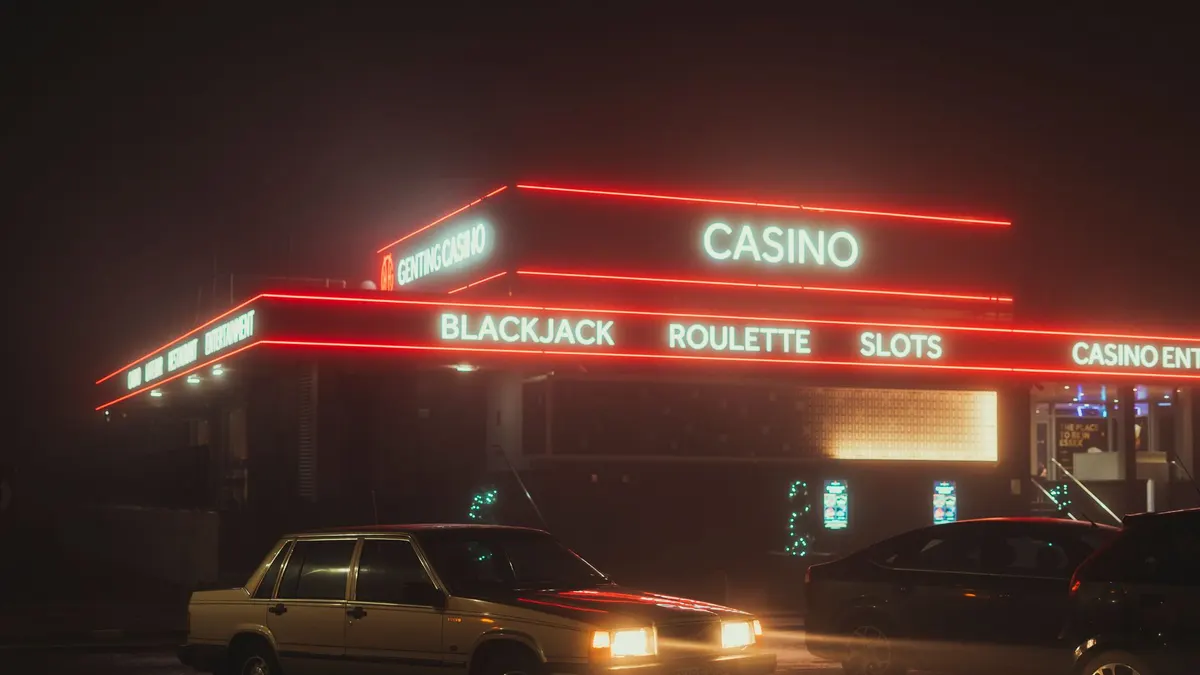
Many casinos allow overnight RV parking, often free, but there is no national rule and no chain-wide policy: every property decides for itself. The only reliable method is the casino’s own website or a phone call to its security desk before you arrive.
The trade you are making
Casinos are not being charitable. An RV parked in the lot is a customer 50 feet from the door, and the house math says some of those customers come inside and spend on dinner, a show, or the floor. In exchange you get something genuinely valuable: a flat, lit lot with 24-hour professional security patrols, which is more oversight than almost any other free place you can park.
Understand the trade and the rest of the rules make sense. The casino wants to know who you are (registration, often a free player’s card), wants you parked where security can see you (a designated RV area), and wants the arrangement to stay parking rather than camping (no setup, no dumping, limited nights).
Two verified policies, and the range they show
Most casinos never write their policy down anywhere public. These two do, on their own sites, both verified July 17, 2026. They are useful less as destinations than as brackets for what “casino RV parking” means in practice.
Tulalip Resort Casino (Tulalip, WA), the free-with-play model. Free RV parking for ONE club members (the player’s card) who use the gaming facilities during their stay, and the policy means it: “Free RV parking is dependent on game play,” and guests who are not actively gaming may be asked to leave. Maximum stay is 3 days within a 30-day period. Rigs must be self-contained, dumping gray water is prohibited, using the resort’s water and power is prohibited, and quiet hours run 10 p.m. to 8 a.m. Registration is required before you park.
Casino Arizona (Salt River Reservation, near Scottsdale, AZ), the paid model. Overnight RV parking at $25 per night, no gaming requirement stated. You buy the pass at the gift shop, then present it at security, park only in the assigned RV spaces, and display the permit in the windshield. Maximum stay is 6 consecutive days within a 30-day period. No dumping of garbage or holding tanks, no alcohol in the lot, no tailgating or barbecue, pets leashed. Security runs regular welfare checks of the area.
Free but you must gamble, or paid but left alone. Days capped at 3 to 6 per month. Self-contained rigs, designated spaces, security check-in, no dumping. That cluster of rules repeats across the properties that publish policies, and it is a fair sketch of what an unwritten policy probably looks like too. But a sketch is not a rule: your casino’s actual policy is whatever it tells you.
How to check a specific casino
- Search the property’s own site for “RV parking” or “parking.” If a policy page exists, it answers most of this in one read.
- Call and ask for security or the front desk. Three questions: do you allow overnight RV parking, where do you want me, and do I need to register or get a player’s card first?
- On arrival, check in the way they told you to and park exactly where directed. The assigned area is where the patrol looks; being outside it is how you get the knock anyway.
Posted signs and what security tells you on the night beat the website, including the casino’s own. Policies change without the page updating.
Etiquette, same as everywhere
One night unless the policy explicitly allows more. No jacks, awnings, chairs, or grills. No generator running all night next to the hotel tower. Take your trash. And go inside at least once: whether or not play is required, the arrangement exists because parked RVers are customers, and it keeps existing for the same reason.
If the casino says no
The fallbacks are the usual set. Truck stops are open all night with fuel and showers. Store lots work where the manager says yes. Rest areas depend heavily on your state, from 3-hour limits to explicit overnight permission, so check your state’s rest area rules. And with a little more driving, free camping on public land gets you an actual campsite instead of a parking space.