


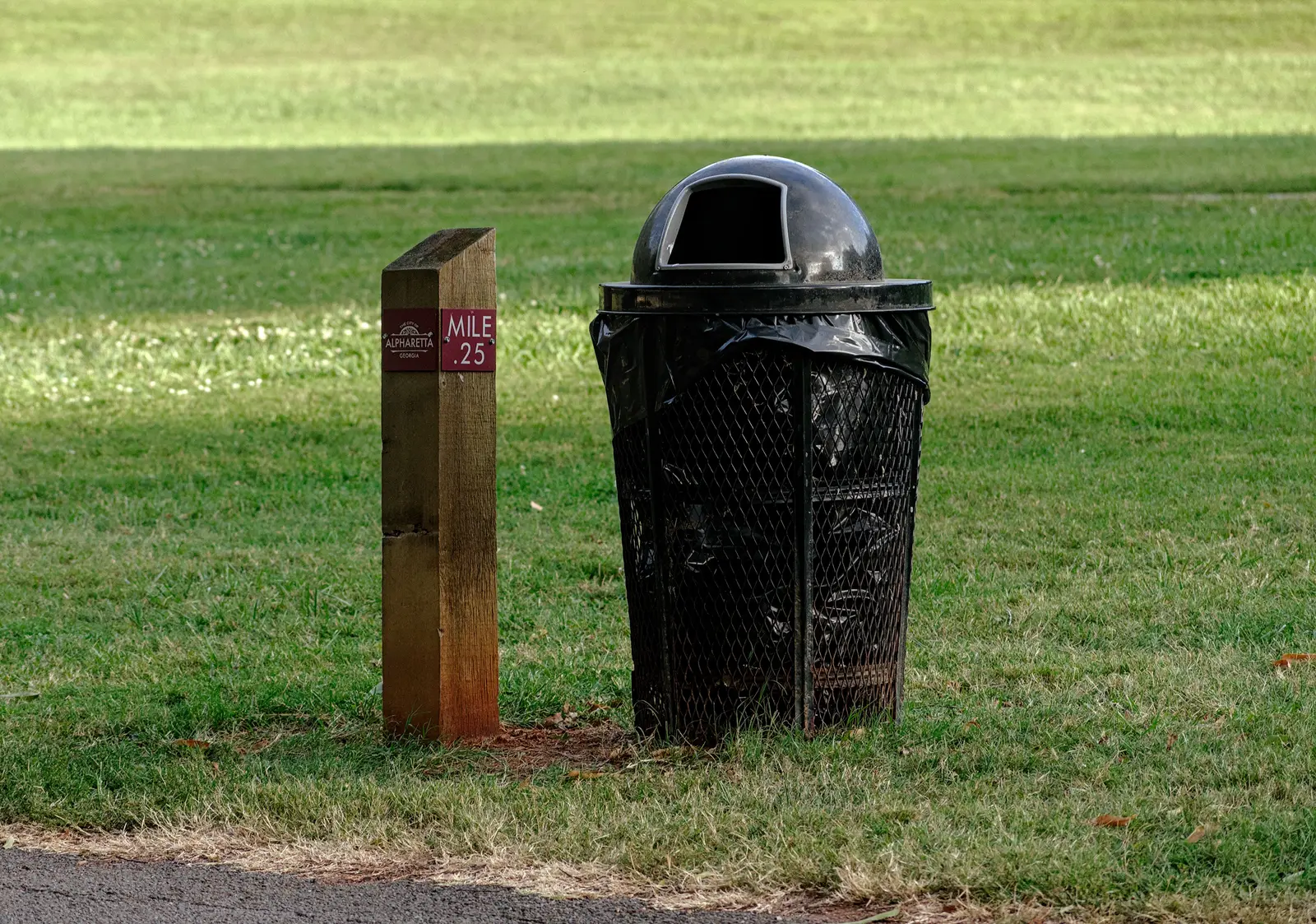
A rest area trash can is for the trash you made on the drive, not the bag from your RV kitchen. Four of the six state rules we read on November 11, 2026 say so in writing: Ohio, Pennsylvania, Maryland and Arizona. Virginia and Florida only say rubbish goes in the receptacle, and draw no line between travel trash and household garbage.
What the four say
Ohio. OAC 5501:2-4-01 prohibits “the littering and disposal of any waste other than travel trash,” and “the disposal of any travel trash in any area except inside the containers provided for this purpose.”
Pennsylvania. 67 Pa. Code 443.2(6) allows “picnic waste and contents of vehicle litter bags” in the containers, then adds: “Disposing of camping, sewage or household refuse in these areas is prohibited.” Camping refuse is named on its own, so trash from your campsite is out too.
Maryland. COMAR 11.04.07.04 says “Picnic and travel litter may be disposed of only in the containers provided for that purpose,” and “Litter, trash, or garbage from other sources may not be disposed of in rest area containers.”
Arizona. ADOT’s rest area rules page asks you to put trash and recycling in the receptacles, and lists “Dumping of sewage and household trash” as prohibited. It also prohibits “Salvaging from trash and/or recycle receptacles.”
The two that don’t draw the line
Virginia’s 24VAC30-51-10(L) says no “bottles, broken glass, wastepaper, or other rubbish may be left” except in the receptacles provided. Florida’s 14-28.002(13) is nearly the same. Neither one mentions household trash. That’s silence, not permission, and a full can at a busy lot is still a full can for the next driver.
The catch
None of these rules defines “travel trash” or “travel litter.” Coffee cups and wrappers from today’s drive are clearly in. A week of kitchen garbage from a camper is closer to household refuse, and in Pennsylvania it’s camping refuse by name.
Virginia writes the penalty into the same chapter: a misdemeanor, “not less than $5.00 nor more than $100 for each offense,” under 24VAC30-51-10(N). The other five rule texts we read name no amount, and we didn’t trace their penalty statutes.
Sewage is separate. Pennsylvania and Arizona both name it. A rest area with an RV dump is the exception, and our piece on state rest area dump station lists covers which DOTs publish one.
What to do
- Bag the day’s trash and use the rest area can. Take the household bag somewhere that accepts household trash, such as a transfer station. Our Quartzsite transfer station piece shows what one county schedule looks like.
- On federal land the line is drawn in a similar place. See household trash in BLM, Forest Service and park cans.
- Read the posted rules board. Maryland’s chapter says its rules “shall be posted on the bulletin board” at each public use area. The sign at the site beats any website, ours included.
State-by-state summaries: Ohio, Pennsylvania, Maryland, Arizona, Virginia, Florida.
Sources
- Ohio Administrative Code 5501:2-4-01, Control and use of rest areas and roadside parks (effective May 15, 2023), read November 11, 2026
- 67 Pa. Code Chapter 443, Roadside Rest Areas, section 443.2 (current through 56 Pa.B. 6006), read November 11, 2026
- COMAR 11.04.07.04, Litter (Control and Use of Rest Areas), read November 11, 2026
- COMAR 11.04.07.01, Application (Control and Use of Rest Areas), read November 11, 2026
- Arizona Department of Transportation, Rest Area Rules, read November 11, 2026
- 24VAC30-51-10, Provisions concerning the use of waysides, rest areas, parking lots, and environs (effective March 11, 2026), read November 11, 2026
- Florida Administrative Code 14-28.002, Public Use of Rest Areas, Welcome Centers, Truck Comfort Stations, and Wayside Parks (amended 12-5-18), read November 11, 2026