

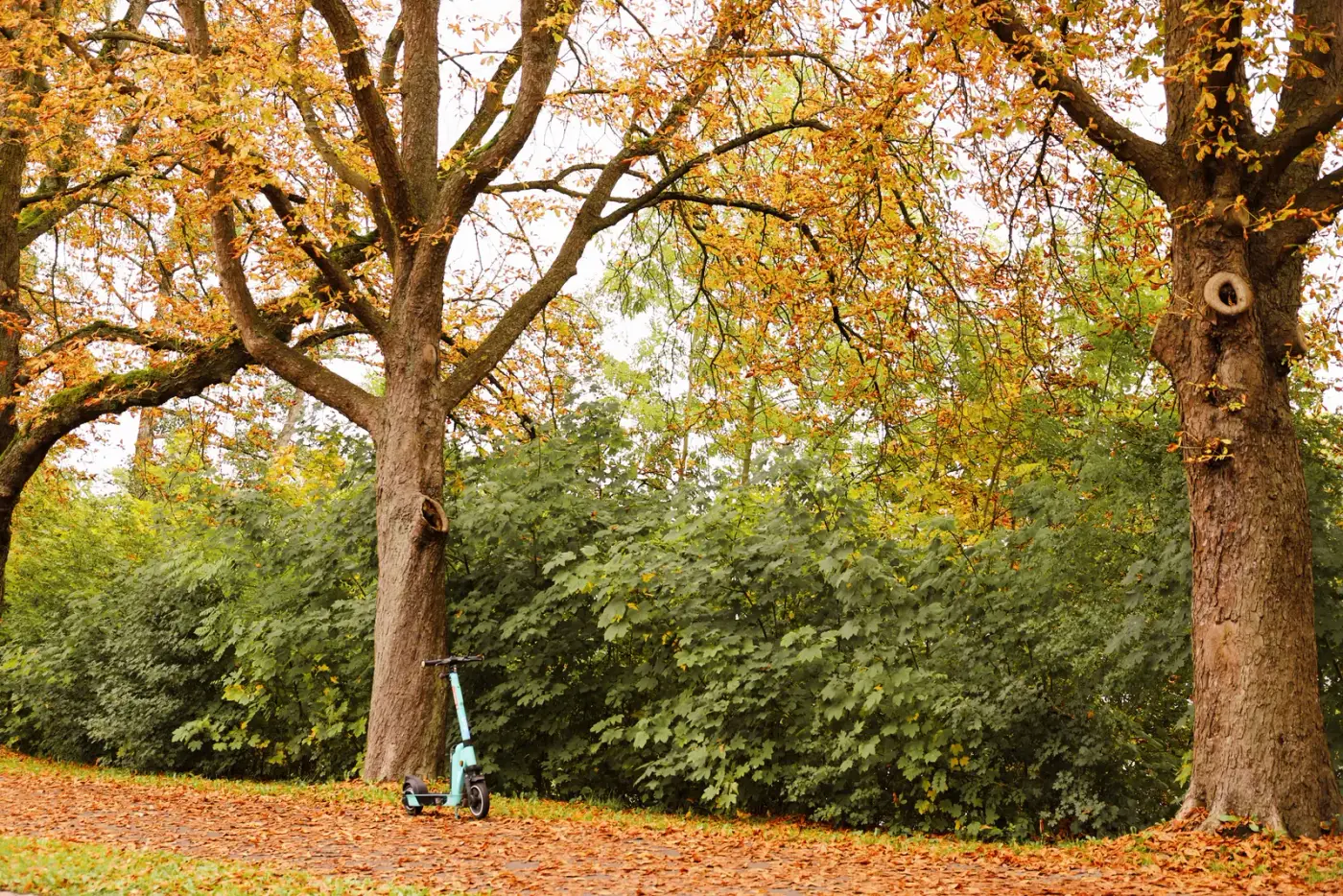
If you carry an electric scooter or a Segway in the back of the rig, the rule about where you can ride it in a national park changed on September 11. If you carry an e-bike, nothing about your ride changed at all. The National Park Service wrote those two devices into separate boxes, and the whole story is in the definition.
The final rule was published August 12, 2026 at 91 FR 52024 and took effect September 11. It creates a new section, 36 CFR 4.32, and its first sentence is the one to remember: “Operating a powered micromobility device is prohibited except in designated locations.”
What the definition actually says
The rule defines a powered micromobility device as “a human-operated, self-propelled device with a curb weight of less than 150 pounds and without an internal combustion engine.” Then it carves out the exceptions: the definition “does not include an electric bicycle, motorized wheelchair, snowmobile, vessel, motor vehicle, or coasting device.”
The Park Service’s own examples are electric scooters, hoverboards and Segways. Notice what the definition is built out of: weight and power source, not product names. If your device is electric, you stand or sit on it, it weighs under 150 pounds and it is not a bicycle, the definition is the test and the park is the authority on how it applies.
The default flipped
This is the part worth understanding, because it is the opposite of what most people would guess. Before this rule, these devices were regulated as motor vehicles, and the Park Service says plainly what that meant: “Under the existing regulations that apply to motor vehicles, by contrast, powered micromobility devices are allowed on park roads and parking areas by default.”
Now they are not. A superintendent has to designate park roads, parking areas, administrative roads and paved or gravel sidewalks and paths before you can ride there, and the designation goes in the superintendent’s compendium. Getting onto ground that has never been surfaced with what the rule calls “artificial or processed materials” takes full rulemaking in the Federal Register, which is slow and park by park.
Two more lines matter to anyone camping. Possessing one of these devices in a wilderness area established by federal statute is prohibited. And where the rule and the superintendent are silent, “the use of powered micromobility devices is governed by State and local law.”
The honest problem with this
There is no national list of which parks have designated which roads. The compendium is a per-park document, and 36 CFR 1.7 lets a superintendent give notice by posted signs, by maps at the superintendent’s office, by newspaper, or by “other appropriate methods, such as the removal of closure signs, use of electronic media, park brochures, maps and handouts.” Section 1.7(b) requires the superintendent to compile the designations in writing, update them annually, and make them “available to the public upon request.”
Available on request is not the same as easy to find. So the practical answer for the next few months is: assume your scooter is not allowed until the park tells you otherwise, and ask at the entrance station or the visitor center rather than reading a website. That includes this one.
What to do
Call the park, or ask for the compendium when you check in. If you were counting on a scooter to get from a campground to a shuttle stop or a trailhead, have a fallback. An e-bike is the obvious one, because the Park Service left e-bikes exactly where they were.
Our national park camping rules page covers the rest of what a park unit regulates differently from the forest or BLM ground next door, and our park passes page covers what a pass does and does not buy you at the gate.
Sources
- National Park Service, Powered Micromobility Devices, final rule, 91 FR 52024, published August 12, 2026, effective September 11, 2026, checked 2026-09-16
- Full text of the final rule, including the new 36 CFR 4.32 and the amended definitions in 36 CFR 1.4, checked 2026-09-16
- 36 CFR 1.7, Public notice (Cornell Legal Information Institute), checked 2026-09-16