


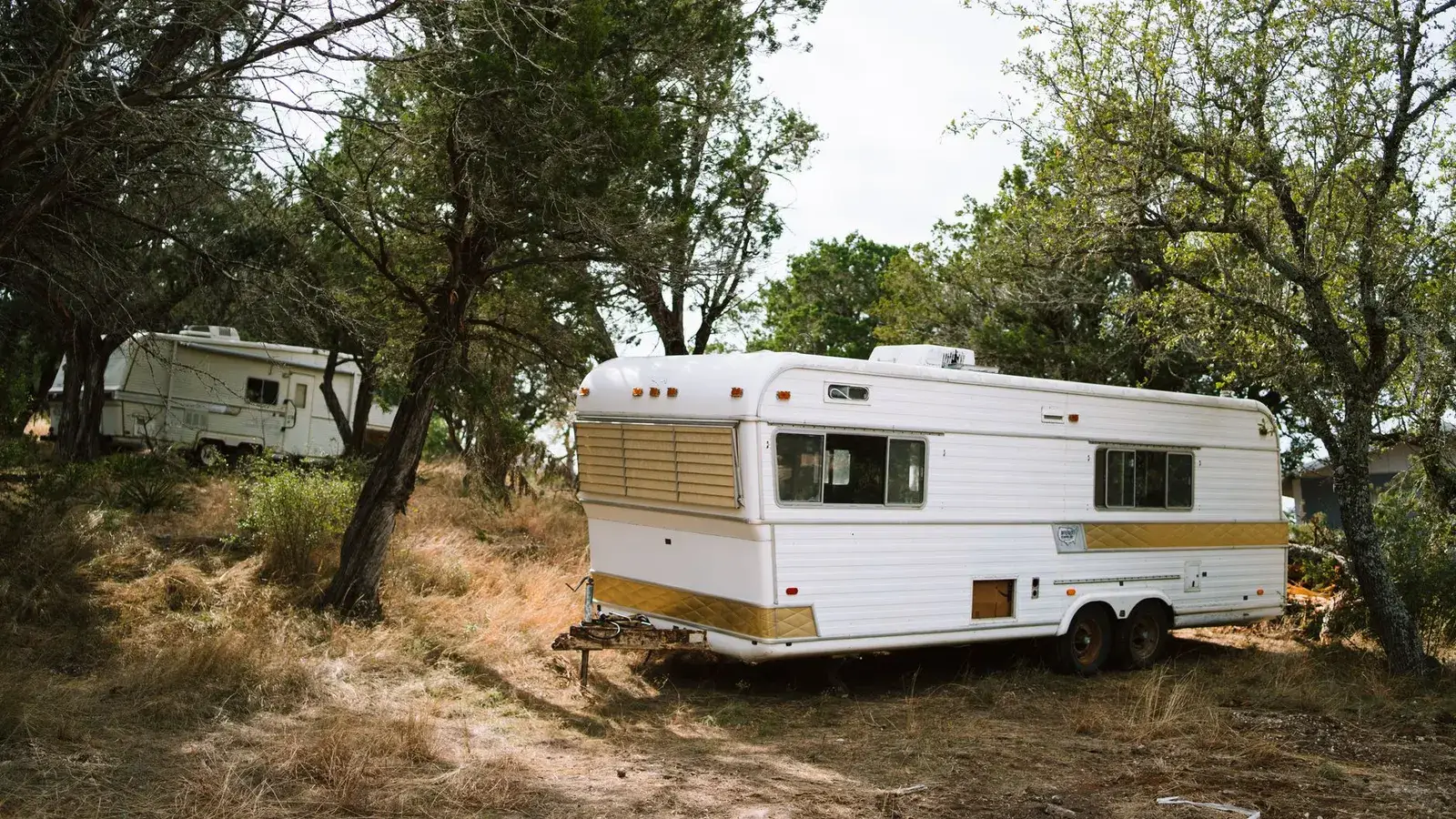
Plan on a running draw in the mid-1,000s of watts and a starting surge well above that for the most common RV air conditioner, the 13,500 BTU rooftop unit. The most useful verified anchor we have: Honda rates its EU3200i, a 2,600W (3,200W surge) generator, as the unit for a 13,500 BTU RV AC. That is Honda’s own sizing claim on its product page, and it brackets the answer nicely. A 13,500 BTU AC fits inside 2,600W running and 3,200W starting, and Honda evidently does not think its 1,800W EU2200i is the tool for the job.
Exact wattage varies by brand, model, and conditions, so treat any single number you read as an estimate. Here is how to think about it instead.
Running watts vs starting watts
An AC compressor needs two different amounts of power. Running watts are what it draws once the compressor is spinning: a steady load your generator has to sustain for hours. Starting watts are the surge the compressor demands in the first moment it kicks on, and for an air conditioner the surge is a multiple of the running draw, not a little bump.
This is why AC sizing questions wreck people. A generator that handles the running load fine will stall or trip when the compressor cycles on, and the compressor cycles on every few minutes all afternoon. Size for the surge, not the cruise.
Your AC’s real numbers are printed on its nameplate (under the shroud on the roof, or in the manual): running amps and locked-rotor amps. Multiply each by 120 volts and you have your actual running and starting watts, which beat anything a website tells you, including this one.
Soft starts change the math
A soft-start device wires into the AC and ramps the compressor up instead of slamming it on, cutting the starting surge substantially. As a category, they are legitimate and widely used: they are the reason people run 13,500 BTU units off generators, inverters, and battery banks that could never handle the stock surge.
What we will not do is promise a specific generator-plus-soft-start combination works, because it depends on your exact AC, the generator’s real surge behavior, altitude, and how hot it is. If your plan requires a soft start, install it, then test the whole setup on a hot day before you are forty miles up a forest road counting on it.
What this means when buying a generator
- Stock 13,500 BTU AC: the 2,600W-and-up class. Honda’s answer is the EU3200i; the cheaper route is a 3,500W-class unit like the Champion 4500 with surge capacity to spare.
- 13,500 BTU with a soft start: smaller generators become plausible, not guaranteed. Test before trusting.
- 15,000 BTU: more of everything, and the size where 2,600W-class units stop being a safe assumption. Read your nameplate.
- No AC off the generator: everything else in the rig is small. The 2,200W class covers it.
To size against your actual loads instead of rules of thumb, run the numbers in our generator sizing tool. And since an AC generator runs for hours at a stretch, noise matters more here than anywhere else: the published sound claims, and how to read them skeptically, are in quietest generators.
Honda’s EU3200i sizing claim was verified on its product page July 17, 2026.