


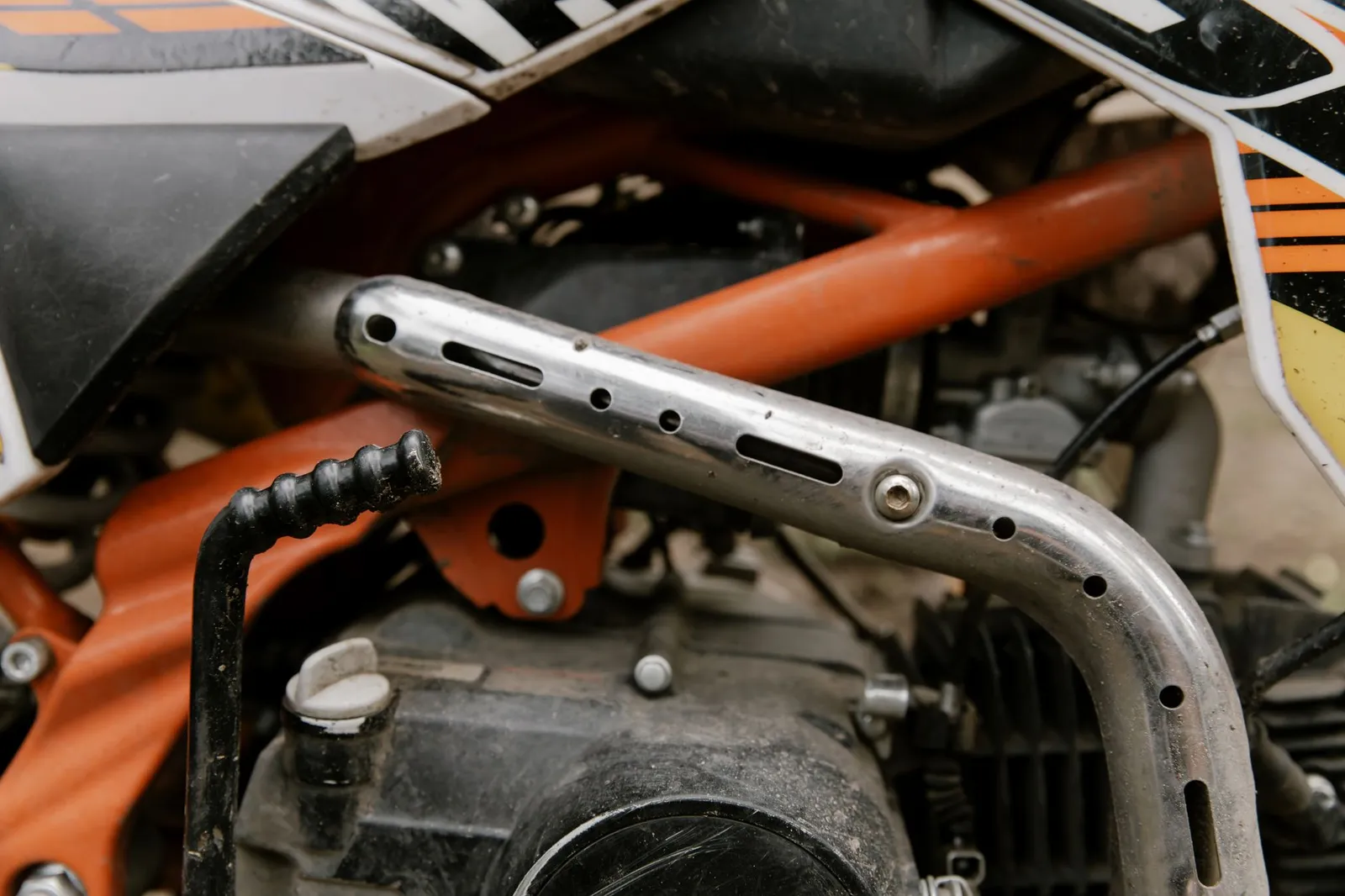
Put a spark arrester on anything you ride off pavement on BLM ground. Three official sources describe that requirement three different ways, the strictest of them is the one a ranger is most likely to be working from, and an arrester costs less than the ticket.
Start with the regulation. 43 CFR 8343.1(c) does not impose a blanket requirement. It says that by posting appropriate signs, or by marking a map which shall be available for public inspection at local Bureau offices, the authorized officer may indicate the public lands where no off-road vehicle may be operated unless it is equipped with a properly installed spark arrester. In other words, the federal rule is area by area, and the notice is a sign or a map at the field office. We read the section on September 20, 2026.
Now the BLM Little Snake Field Office, which lifted Stage 1 fire restrictions in northwest Colorado on September 11, 2026. The announcement lists what survives the rescission, and the last item is flat: “Off-road vehicles on public lands must also be equipped with a properly installed spark arrester as required by federal regulations.” No area, no map, no condition.
Then the BLM’s own national off-highway vehicle page, which files the subject under best practices and covers one vehicle type: “Motorcycles should be equipped with an approved spark arrester and muffler that meets State regulated noise standards.”
Which one wins
We are not going to pretend that resolves cleanly, because it does not. A field office announcement is not a legal instrument the way the CFR is, and a best-practices bullet is not a rule at all. But the practical answer is not close. The field office is the office that signs the orders, prints the maps and sends out the people who check. If you are standing on Little Snake ground, the sentence that matters to your afternoon is theirs.
There is also no version of this where running an arrester costs you anything. The regulation names the standards: Forest Service Standard 5100-1a, or the 80-percent efficiency level under SAE Recommended Practices J335 or J350, meaning it retains or destroys at least 80 percent of carbon particles at all flow rates and is warranted for at least 1,000 hours of normal use. The question for most people is not whether to buy one, it is whether the one already on the machine is still intact, mounted, and not packed with carbon.
The one exemption in the regulation is narrow and seasonal: no arrester is required where there are 3 or more inches of snow on the ground.
The rule nobody reads
While you are in that section, read paragraph (d). From a half-hour after sunset to a half-hour before sunrise, headlights must illuminate an object at 300 feet under normal, clear conditions, and red taillights must be visible from 500 feet behind. If you ride back to camp after dark, that is a federal standard, not a suggestion.
What to do
Check the arrester before the trip, not at the trailhead. Then call or stop at the field office for wherever you are going and ask whether the area is posted, because the regulation says that map is supposed to be available for public inspection there. Fire prevention orders stack their own requirements on top and change through the season, so read the current one: our fire restrictions guide covers how to find and read an order.
The posted sign at the area and the field office’s current word beat this page.
Sources
- 43 CFR 8343.1, Standards (Legal Information Institute text of the Code of Federal Regulations), read September 20, 2026
- U.S. Government Publishing Office, govinfo, 43 CFR 8343.1, read September 20, 2026
- Bureau of Land Management, Fire restrictions ease in Little Snake Field Office, September 11, 2026, read September 20, 2026
- Bureau of Land Management, Off-Highway Vehicles on Public Lands, read September 20, 2026