
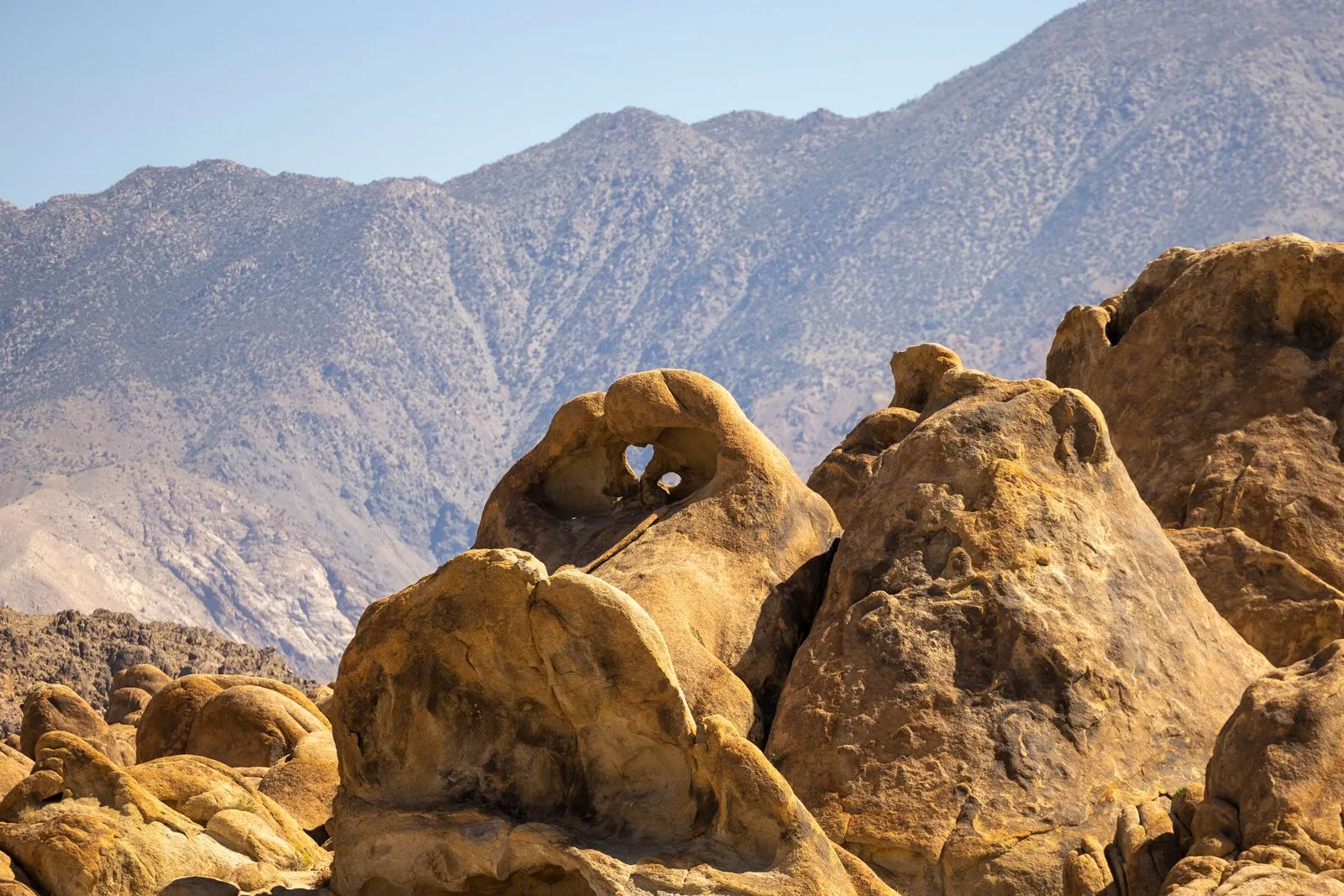
Alabama Hills is not a standard BLM 14-in-28 camp. It is 14 nights in a calendar year across the entire Bishop Field Office, and you also need a free permit to camp in a designated site. That is a much shorter stay than the aggregators and app entries suggest, and it is the reason people get told to move when they think they still have days left.
Both facts come straight off BLM. The Bishop Field Office page says dispersed camping is “limited to 14 days per year within the Bishop Field Office boundaries,” verified today at blm.gov/office/bishop-field-office. Alabama Hills sits inside those boundaries. So do the other public lands the field office manages, and every night at any of them counts against the same 14.
What most write-ups get wrong
The standard BLM camping pattern is 14 days in a 28-day period, then move. That is the default described on BLM’s national camping page and it is what people carry into every trip. Bishop Field Office is more restrictive: 14 nights a year, full stop. Not 14 then move. Not 14 per 28. Fourteen for the whole year.
That is not a technicality. If you spent nine nights near Lone Pine in March, you have five left for the rest of the year in Alabama Hills, Volcanic Tablelands, or anywhere else the field office manages. There is no reset by moving down the road, because the whole field office is one bucket.
The permit rule, as of late 2024
Since September 25, 2024, BLM requires a permit for designated dispersed camping in Alabama Hills. The BLM Alabama Hills page states plainly: “Camping permits are now required for designated camping in the Alabama Hills. Permits are free and do not guarantee a campsite. All camping is first come, first serve.”
Two things worth reading twice. The permit is free but mandatory. And it is not a reservation. If you get a permit and drive out and every designated site is taken, that is on you to solve. The designated sites are marked with a tent symbol; anywhere else in Alabama Hills is day-use only, and overnight there is not allowed.
What to do before you go
Check the BLM Alabama Hills page for the current permit source, get one for your trip window, and treat your first stop as scouting rather than as the site. If you already used field office days earlier in the year, subtract them. The ranger will know.
The posted sign at the site and the ranger’s current word beat any website, this one included. If the sign says something different than what BLM’s page said last week, the sign is right. Bring water, respect the designated-site markings, and pick another public land option nearby if the count is against you. Our California free-camping overview is one place to start, and the general stay-limits guide explains how these caps normally work in the rest of BLM country.