


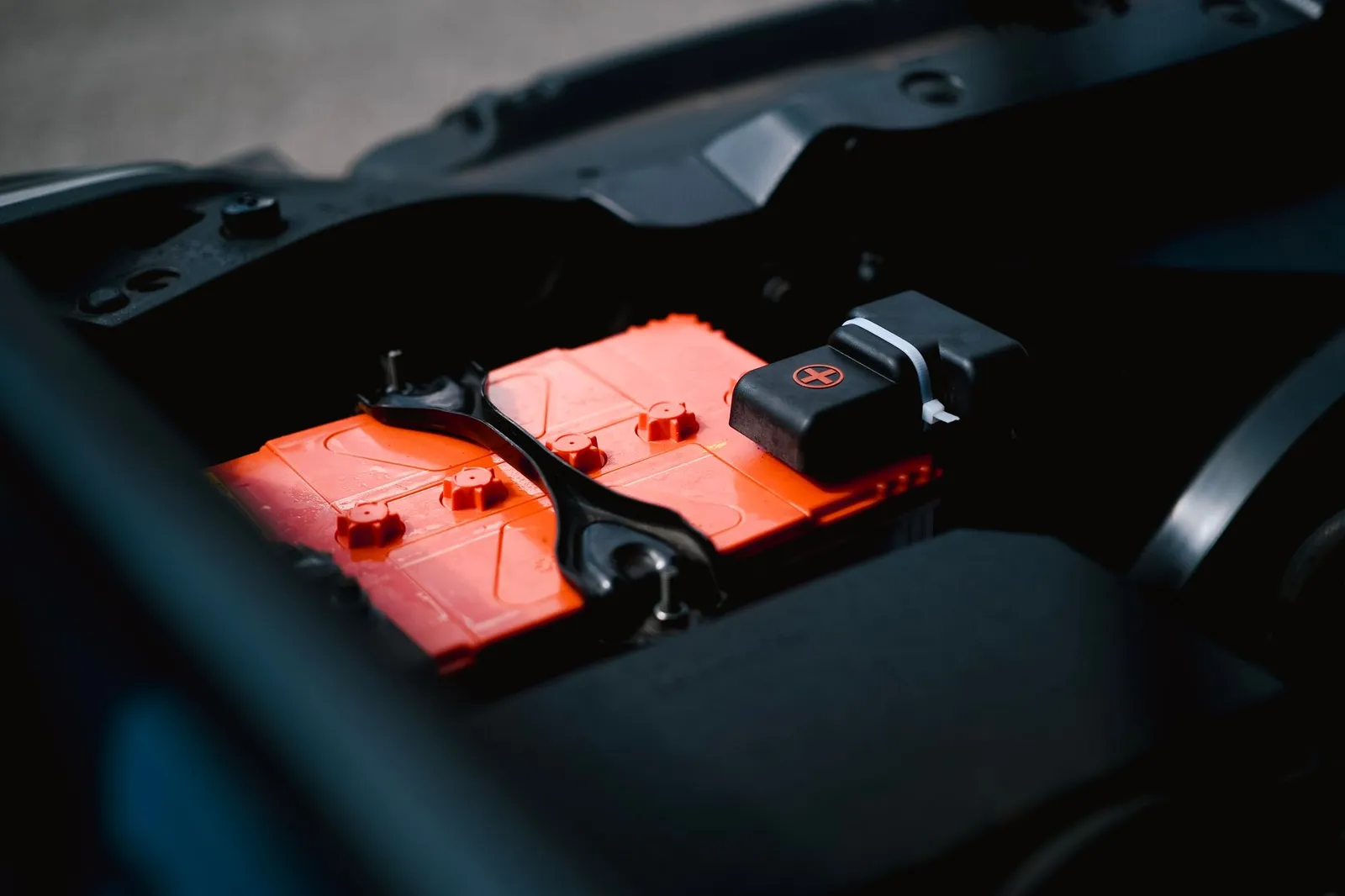
The amp-hour number printed on a lead acid battery is measured over a 20 hour discharge. Empty the same battery in an hour instead and an AGM delivers about 65 percent of that number. That is not a defect and it is not a secret: Victron publishes the entire curve in its gel and AGM datasheet, read August 15, 2026.
The curve
The datasheet states that rated capacity “refers to 20 hour discharge, in other words: a discharge current of 0,05 C.” On a 100Ah battery that is a 5 amp draw. Here is what the same battery returns at other rates, AGM first, gel second:
- 20 hours: 100 percent / 100 percent
- 10 hours: 92 / 87
- 5 hours: 85 / 80
- 3 hours: 78 / 73
- 1 hour: 65 / 61
- 30 minutes: 55 / 51
And a line most people never see: “the capacity reduction will be even faster in case of a constant power load, such as an inverter.” An inverter holds watts steady, so as the battery sags the current climbs, which pushes you further down that table while you watch.
Run the numbers on something real
Say you want 1,000W out of an inverter. At a nominal 12 volts, allowing for inverter losses, that is roughly 90 amps off the bank. On a single 100Ah AGM, the one hour rate is 65 amps, so 90 amps is faster than that. You land between the 65 percent row and the 55 percent row, and the constant-power note pushes you toward the low end of it. Call it 55 to 60Ah delivered over about 40 minutes, and you have taken the battery flat to get it.
Now apply depth of discharge. Victron rates its 12V deep cycle AGM at 400 cycles to 80 percent discharge, 600 cycles to 50 percent and 1500 cycles to 30 percent. Gel runs 500, 750 and 1800 across the same three. The familiar advice to stop at 50 percent is not a cliff. It is a price list. Going to 80 percent works fine and costs you a third of the battery’s life.
So a 100Ah lead acid battery, used the way people actually use one, is a 50Ah battery. Used hard through an inverter, it is closer to 30Ah of comfortable daily draw.
Two more things the datasheet says out loud
Charging is capped too. “The charge current should preferably not exceed 0,2 C,” which is 20 amps on a 100Ah battery. That sets a ceiling on how fast solar or an alternator can put the bank back, no matter how many panels you bolt on.
And heat is expensive. Design float service life runs 7 to 10 years for AGM at 20C (68F), 4 years at 30C (86F), and 2 years at 40C (104F). If you spend summers parked in the desert, budget for the battery bank on a shorter clock than the brochure implies. That is worth knowing before a season on Arizona public land.
What to do about it
Size from watt-hours you actually consume, not from the label on the case. Add up your real daily draw, including the 12V fridge, then work backwards through the discharge rate you will be pulling at. Our solar calculator will do the panel and bank arithmetic once you have that number.
One caveat worth stating plainly: these are Victron’s figures for Victron’s batteries. Another brand’s datasheet will publish a different table, and some publish none at all, which is its own kind of answer. Read yours. The rest of the power basics are on our RV power hub.