


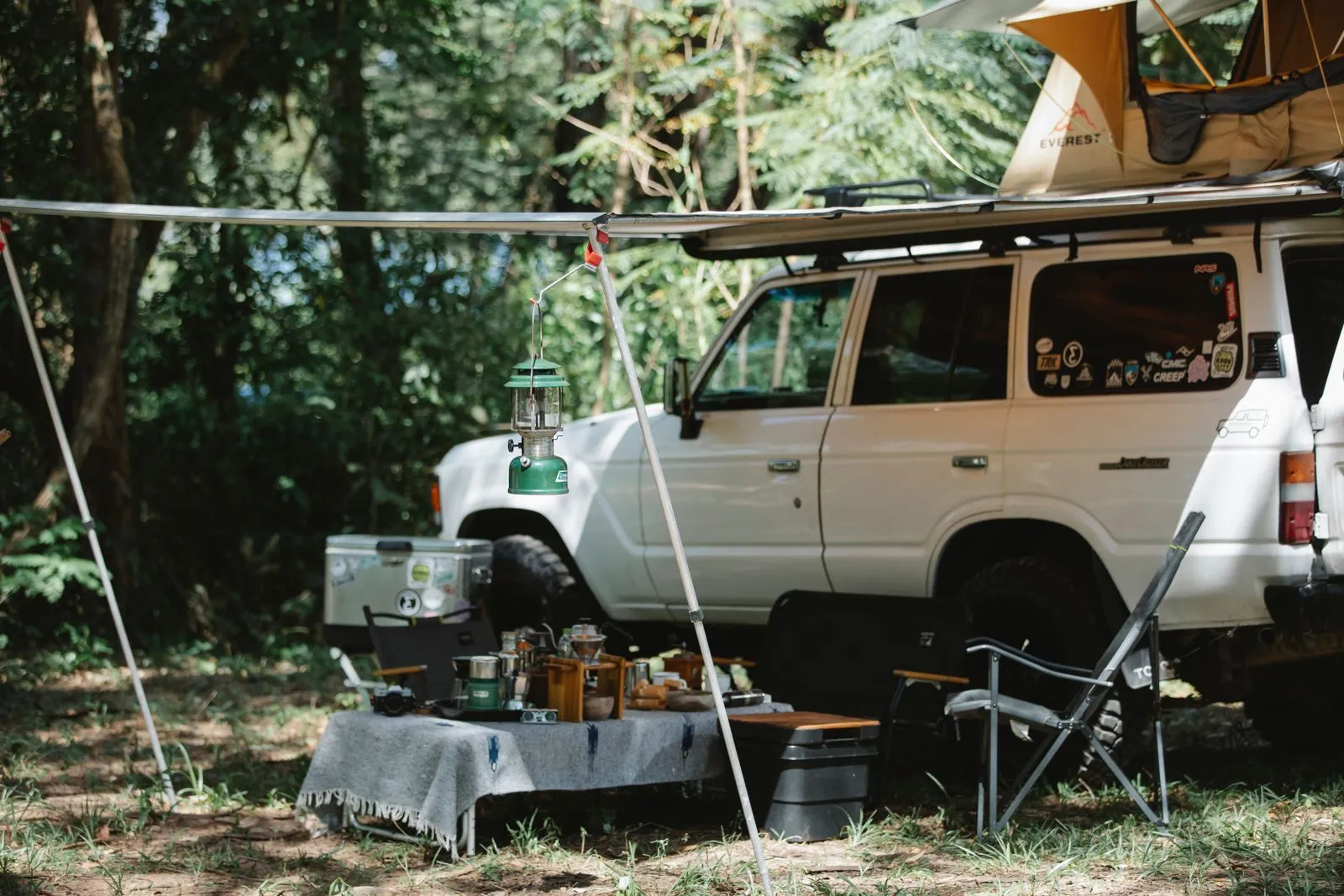
A 12V compressor fridge pulls about 20 to 24 amp-hours per day at moderate temperatures. That is the number to size your battery on, and it is much smaller than the rated current on the sticker. The 7A input rating is peak, only when the compressor cycles on. Everything else you plan around is average.
The reason the rated amps and the daily draw look so different is duty cycle. Modern portable fridges use variable-speed compressors that run hard to pull temperature down, then loaf or shut off once the box is cold. The number you want off the spec sheet is Ah per hour, sometimes written Ah/h or “energy consumption,” measured at a defined ambient and setpoint. Multiply by 24 and you have a daily estimate.
Two real spec-sheet examples
The Dometic CFX3 35 technical data, verified today, lists energy consumption at 12V DC of 0.98 Ah per hour at 90F ambient and 39F internal. That works out to about 23.5 Ah per day. The rated input current on the same page is 7.5A, which is what the compressor pulls at full speed, not the daily average.
The ARB Zero 47-quart single zone, verified today, lists 0.8 Ah as its current draw specification, with a variable-speed compressor. Read across at 24 hours and that is about 19 Ah per day.
Two different brands, two different sizes, both landing in the same band: roughly 20 to 25 Ah per day at moderate conditions. That band is your working number for a typical portable 12V fridge.
What moves the number
Four things push the daily draw up:
- Ambient temperature. A rig baking in the Arizona sun at 110F outside is not the 90F Dometic tests at. Duty cycle climbs. Plan on 30 to 60 percent more.
- Freezer setpoint. Running the whole box as a freezer, or the freezer side of a dual-zone unit, roughly doubles the work versus fridge-only.
- Opening the lid. Every open lets in warm air and starts the compressor. Overlanders who open the fridge every ten minutes see numbers well above the spec-sheet rating.
- How full it is. A mostly-empty fridge cools warm air on every cycle. A full one holds temperature. Counterintuitively, packing the box lowers draw.
Sizing your battery
Take the daily number, multiply by how many nights you want, and divide by the usable percentage of your battery.
A 24 Ah per day fridge, 4 nights on the road, on a 100Ah lithium bank you don’t want to pull below 20 percent: (24 x 4) / 0.8 = 120 Ah of battery needed just for the fridge. Which means a 100Ah lithium is not enough by itself for a fridge-only load over 4 nights: you either need more battery, or solar to recharge, or you keep the total shorter. That is the honest math, and it is why fridge draw drives so many rig-power decisions.
Run the same math on your rig with our RV solar calculator to see what your daily load looks like once the fridge, lights, water pump, and inverter overhead are all in. For the generator side of the same question, our generator sizing tool covers the wattage side. And our Arizona free camping page is a good place to start if you’re planning long stays in the desert where fridge draw actually punishes you.