
One national park campground out of the 30 we read answers this question in writing, and the answer is no.
Death Valley’s Furnace Creek listing on Recreation.gov states it plainly: “Campervans, pop-ups, and RVs are not permitted in Tent Only Sites 100-110 and 115-150. Campers reserving Tent Walk-in Sites 115-150 may not sleep in their vehicles.” That notice was active when we read it on September 21, 2026, on a listing last updated September 2.
We then read 29 more national park campground listings looking for the same sentence. None of them had it.
What we checked
Upper Pines and North Pines at Yosemite. Watchman at Zion. Jumbo Rocks, Black Rock, Indian Cove and Cottonwood at Joshua Tree. Mather and Desert View at Grand Canyon. Lodgepole at Sequoia. Blackwoods and Seawall at Acadia. Elkmont at Great Smoky. Moraine Park and Aspenglen at Rocky Mountain. Kalaloch at Olympic. Big Meadows at Shenandoah. Devils Garden at Arches. Chisos Basin and Rio Grande Village at Big Bend. Morefield at Mesa Verde. Gros Ventre and Signal Mountain at Grand Teton. Slough Creek at Yellowstone. Cedar Pass at Badlands. Sunset at Bryce. Pinnacles.
Plenty of them restrict what kind of unit can occupy a site. Joshua Tree caps each site at six people, two vehicles and three tents. Kalaloch allows one RV and a tow vehicle, or two passenger vehicles, if they fit the driveway. Those are occupancy limits. None of them says anything about where a person may sleep.
Why the gap matters
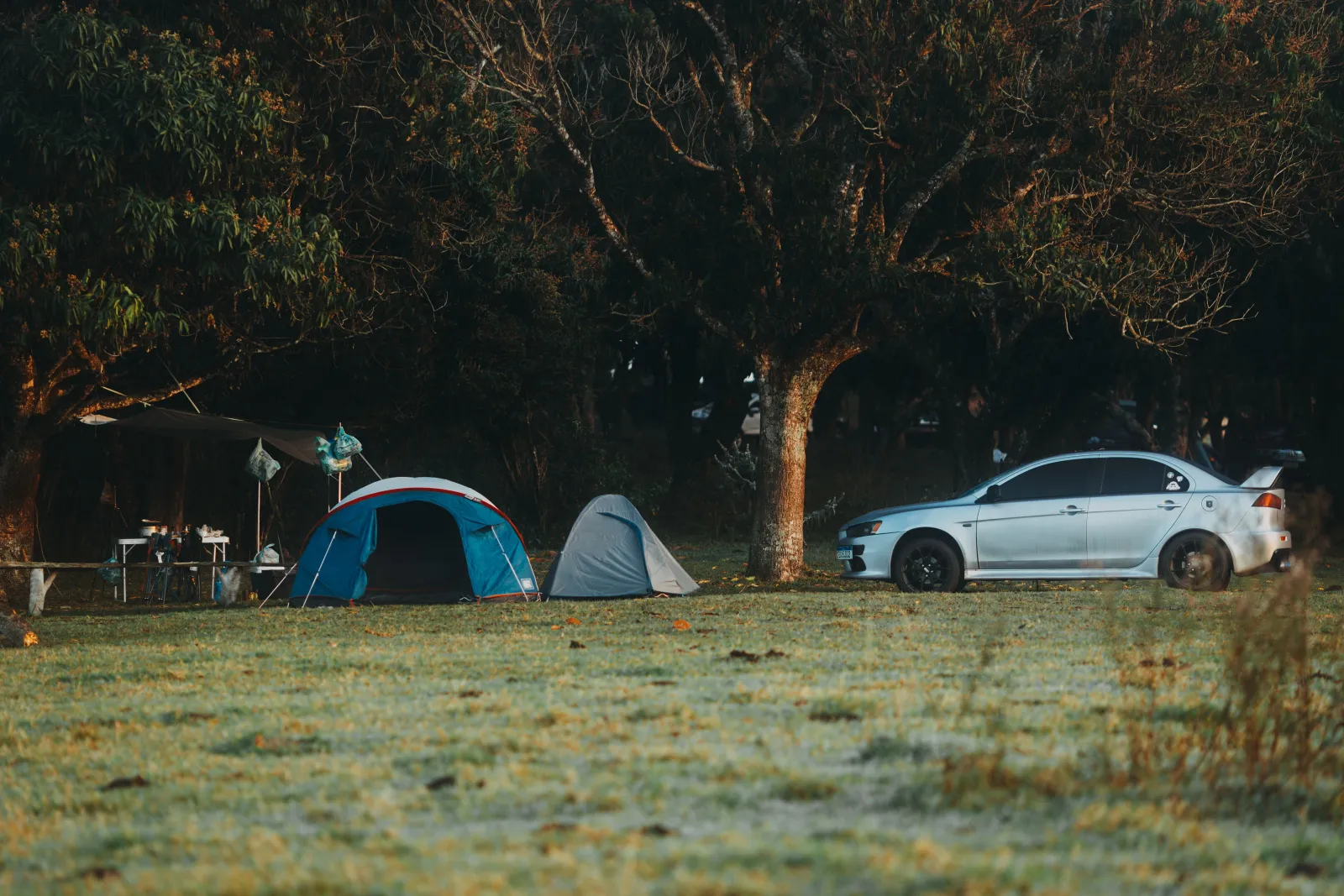
The question people are actually asking is cheaper than it sounds. Tent sites are often the only thing left, and they are usually the cheapest thing on the page. If you drive a wagon or a minivan and sleep in the back, booking a tent site and sleeping in the car looks like the obvious move.
Furnace Creek shows that at least one park considered that move and decided against it for a specific block of sites. That tells you the rule is a real category, not a hypothetical. What it does not tell you is what any other park thinks, and we are not going to extrapolate from a sample of one.
The honest limit on this
We read booking listings, not every park’s full regulations. A park can carry rules in its superintendent’s compendium that never reach the Recreation.gov page, and we did not survey those. So “the listing does not mention it” means exactly that and nothing more. It is not a finding that the park allows it.
What to do before you book
Open the campground’s own Recreation.gov page and read the notices at the top, not the site photos. That is where Furnace Creek puts its rule, and it is where yours will be if it has one. Then look at whether the site is a walk-in, because a walk-in parks your vehicle somewhere other than the site, which changes the question entirely.
If the listing is silent and you plan to sleep in the vehicle, call the park and ask. One phone call is cheaper than a ranger at the window. Our car sleeping guide covers the rest of the ground, and the camping versus overnight parking distinction is the one that decides most of these questions.
Whatever a website says, including this one, the posted rule at the campground and the host or ranger on site is the version that counts.