


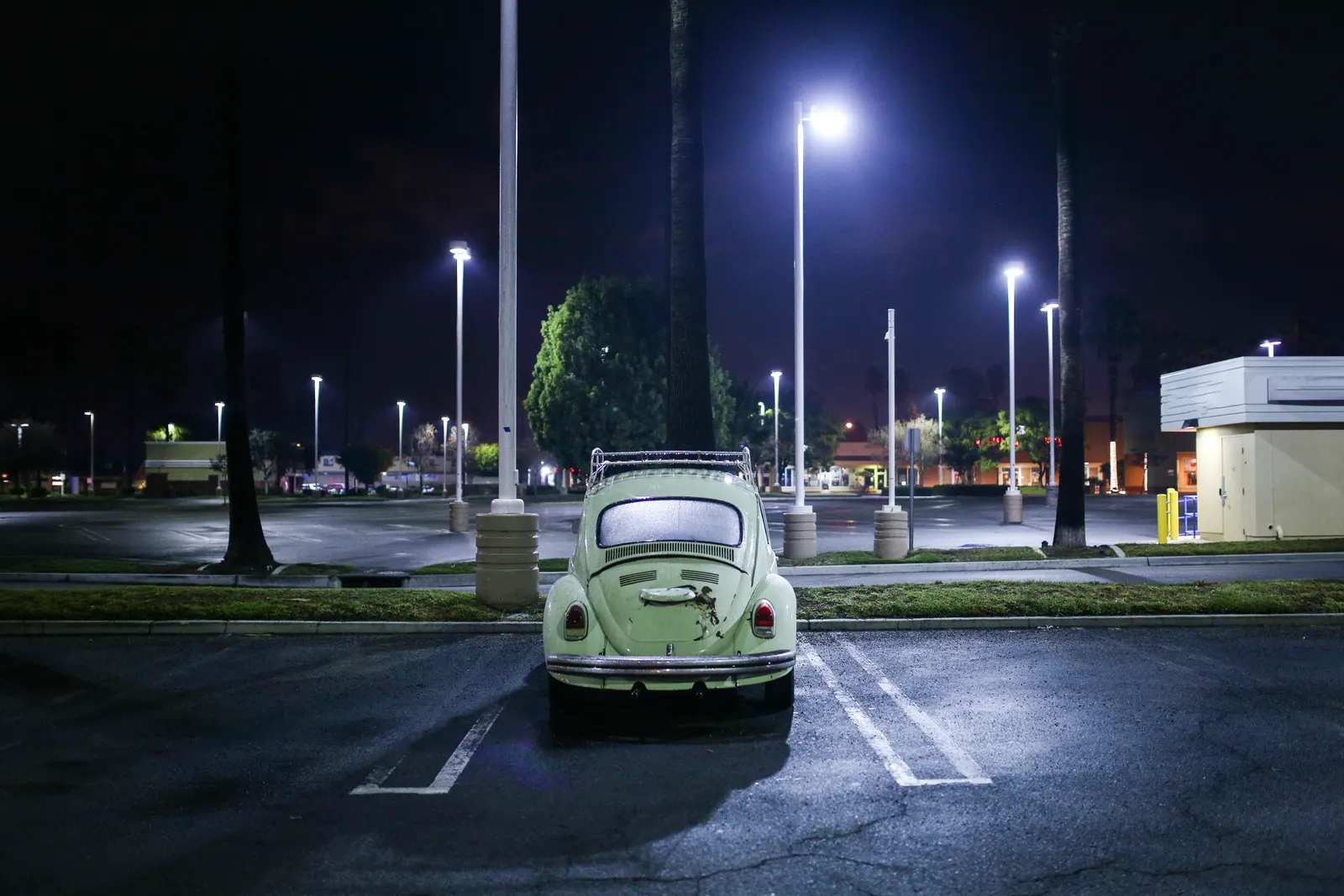
A vehicle left alone at a rest area runs on a different clock from one with you asleep in it, and the unattended clock is often the shorter one. In Maryland and Ohio it is 3 hours, and then the rule says tow. In California the rule allows no time at all if you parked to go somewhere else. All texts checked October 25, 2026.
You hit it when you meet a friend and ride on together, leave the car to hike, or walk off to get help after a breakdown.
What each rule says
California. 21 CCR 2205(c): “No parking is allowed for any period of time for the purpose of allowing any traveler to engage in any activity off of the safety roadside rest area or vista point.” It names cross-country skiing, off-road vehicle use, fishing, hiking, camping and hunting. There is no grace period to count. The separate stay limit in 2205(b) is 8 hours in any 24.
Maryland. COMAR 11.04.07.09: vehicles left unattended for more than 3 hours, without permission of the Maryland State Police or the caretaker, “will be towed away at the expense and risk of the owner.” The general limit in .07 is also 3 hours, so Maryland gives you nothing extra either way.
Ohio. OAC 5501:2-4-01(B)(12) prohibits “leaving any vehicle unattended for three hours without the permission of the state highway patrol or the department. Any such vehicle will be towed away at the expense of the owner.” The rule sets no hour cap on an occupied vehicle. The 3 hours are about the empty car.
Pennsylvania. 67 Pa. Code 443.2(2) caps parking at 2 hours in a 24-hour period, or the posted limit. Unattended for more than 24 hours, a vehicle “will be considered abandoned and subject to removal and storage” at the owner’s cost. Item (8) separately bars parking to hunt or fish outside the rest area.
Wisconsin. The WisDOT guidelines define long-term parking as 24 continuous hours or the posted limit, whichever is shorter, and say it “applies to vehicles both occupied and unoccupied.” Past that, the vehicle is reported to the State Patrol “and the procedure for removal will begin.”
The catch
Five states do not make a national rule. We tried to add Kansas and Mississippi, but both official pages render in the browser and we could not read the rule text this run, so they are not here. Where a state’s page says nothing about unattended vehicles, that is a gap, not a permission. Our rest area rules by state shows what we have verified and what we have not.
Pennsylvania’s 24-hour abandonment line is not a parking allowance. The 2-hour limit in the same item applies to the car whether you are in it or not.
What to do
- Do not use a rest area as a park and ride. Use a lot built for it: Vermont, for one, allows overnight parking at its park and rides.
- If you break down, use the permission clause. Maryland and Ohio both name who can grant it: call the state police or patrol before you leave the vehicle.
- Read the sign at the entrance. Pennsylvania and Wisconsin both write the posted limit into the rule, so a sign shorter than the regulation is the one that applies.
State detail: Maryland, Ohio, Pennsylvania, Wisconsin, California.
Sources
- COMAR 11.04.07.09, Unattended Vehicles (Maryland Division of State Documents)
- COMAR 11.04.07.07, 3-hour use limit (Maryland Division of State Documents)
- Ohio Administrative Code 5501:2-4-01, rest area rules, effective May 15, 2023 (Cornell LII)
- 67 Pa. Code 443.2, Prohibited activities or actions (Pennsylvania Code)
- Wisconsin DOT, Rest Area Guidelines and Policies
- Cal. Code Regs. tit. 21, 2205, rest area prohibitions (Cornell LII)