

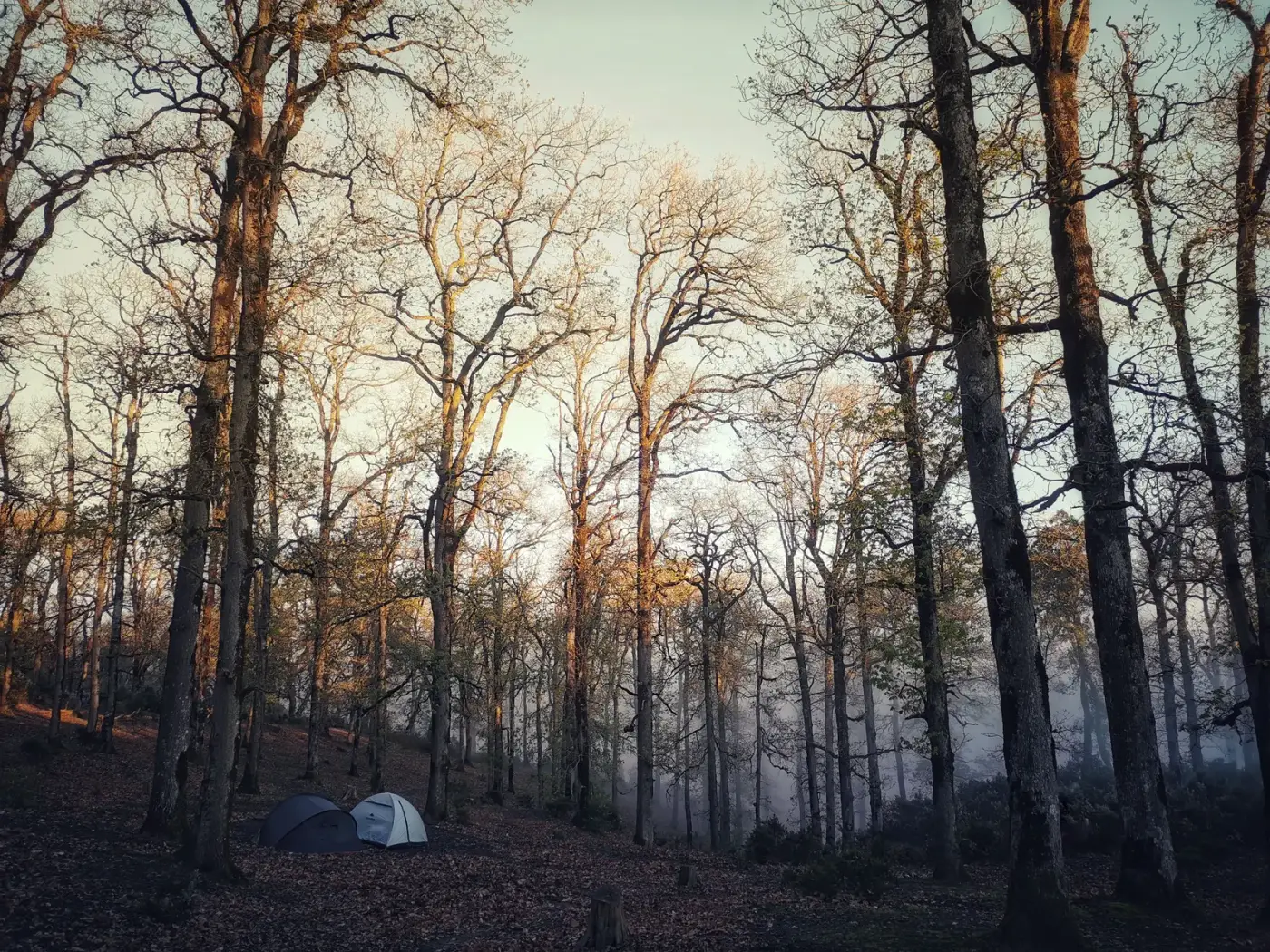
Pennsylvania gives you one free night almost anywhere in a state forest, and the allowance disappears the moment your vehicle is part of the trip. Not if you drive to the trailhead. If you are using the vehicle to store or carry your gear, you are in a different category of the rule, and that category has no free night in it.
The two categories
17 Pa. Code 21.117 splits the whole question in two.
Subsection (a): “Primitive camping without a permit is prohibited if the camper stays more than one night at a campsite. Primitive camping is overnight camping when a motor vehicle is not used for storage or transportation during the camping experience.”
Subsection (b): “Motorized camping without a permit is prohibited. Motorized camping is overnight camping in or near a vehicle when the vehicle is used for storage or transportation during the camping experience.”
Read them together. Primitive camping gets a one-night grace. Motorized camping gets none.
DCNR puts it in plainer words on its own page: “if you are camping close enough to your vehicle to access it to store gear and supplies, you are not primitive camping, but are motorized, roadside camping. A permit and fee is always required for motorized, roadside camping and can only be done at designated sites.”
The setback that closes the workaround
The obvious dodge is to carry a tent 50 feet from the truck and call it primitive. DCNR’s guidelines rule that out. Backpackers “may camp overnight anywhere except: In designated Natural Areas, Within 200 feet of a forest road, Within 25 feet of a trail, Within 100 feet of a stream or any open water.”
Two hundred feet off a forest road is far enough that you are not going back to the truck for anything tonight. Which is the point.
When the free permit becomes required
The primitive camping permit costs nothing. DCNR lists when you need one: staying more than one night at a campsite, a site designated “permit required,” wanting an emergency point of contact, camping inside the Pine Creek Gorge along the Pine Creek Rail Trail in Tiadaghton or Tioga State Forests, camping “using a vehicle for storage or transportation,” or wanting a campfire during the spring wildfire season. Groups over ten need a Letter of Authorization from the district office.
You get it by contacting the state forest district office where you plan to camp. DCNR names no statewide portal, which means a phone call.
Fires run on their own calendar
17 Pa. Code 21.118 permits fires in gas grills and camp stoves used as designed, in charcoal appliances, in department fireplaces, and in fire rings that are department-provided or, if you build one, “do not exceed 2 feet in diameter” and “constructed of noncombustible material.”
Then 21.118(f) shuts that down at two specific times: when the district forester rates forest-fire danger “high, very high or extreme,” and every year “From March 1 through May 25.” The spring closure is a calendar rule, not a conditions rule. It applies in a wet May.
The verdict
Pennsylvania is one of the better free camping states east of the Mississippi if you walk in, and one of the worst if you sleep in a vehicle. That is an unglamorous answer and it is the right one. Nothing in the rule bends for a well-behaved van.
In a rig, use the designated motorized sites and pay for them, or look at the Allegheny National Forest instead. Our Pennsylvania free camping page covers both, and our dispersed camping guide covers how the federal version of this rule differs.
One last thing, because it overrides everything above: the sign at the site and whatever the district forester tells you today beat this page. Districts post their own closures, and a site can be signed out of service for a season without any of it reaching a website.