


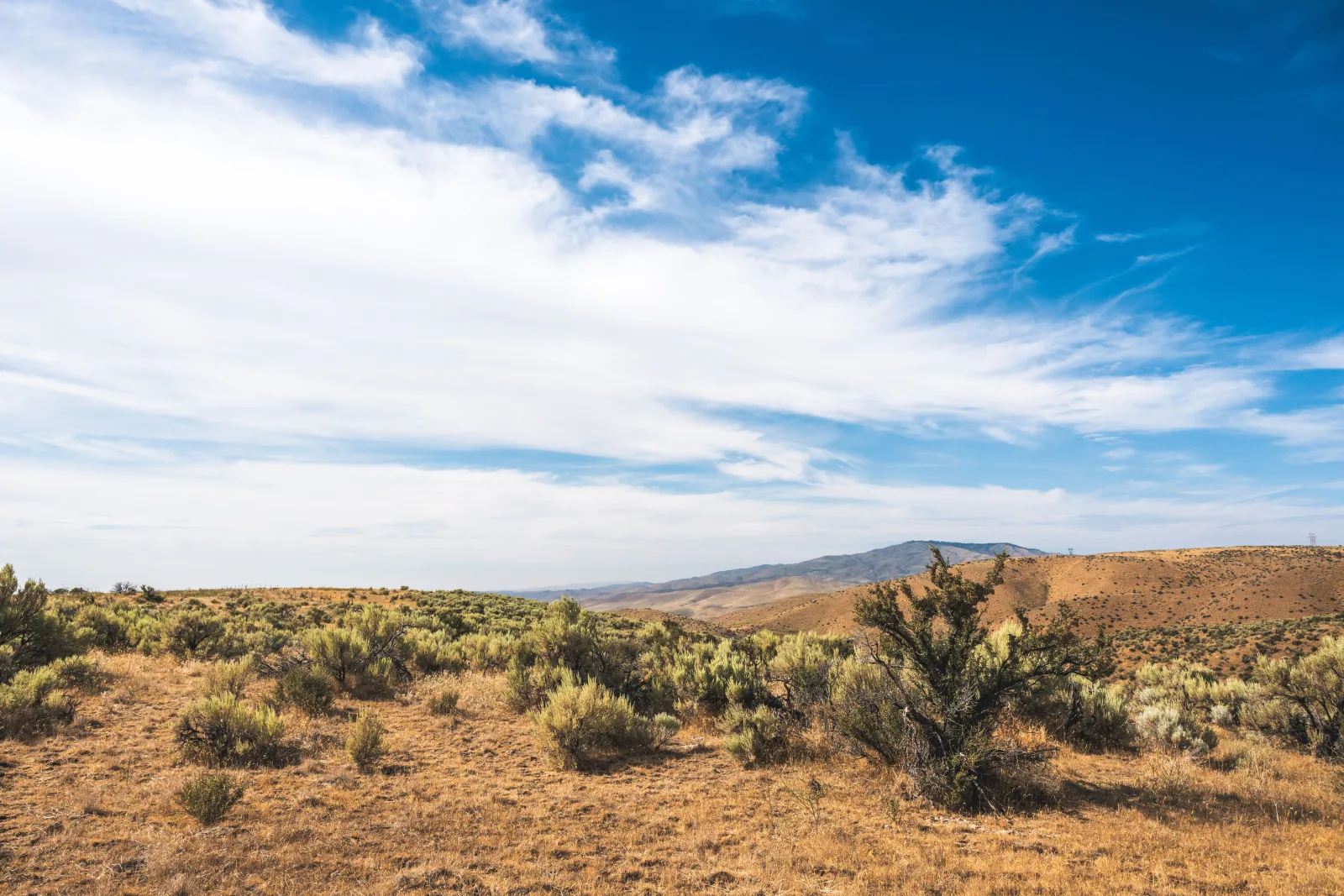
Neither of these announcements closes anything, and neither one publishes a map you could hold against your campsite. That is the problem, because both cover ground that is open to dispersed camping right now.
Two BLM field offices announced aerial herbicide work in the last five days. They handled the public half of it completely differently.
What each one actually says
Challis, Idaho. The BLM’s release, dated September 17, 2026, covers about 2,500 acres in Custer County, with treatments running September 21 through October 5 “as weather and vegetation conditions allow.” The named ground is near Trail Creek in the Pahsimeroi Valley and near the Jimmy Smith Lake area of East Fork. The herbicide is imazapic. The release gives the public one instruction: “The public may see low-flying aircraft over designated treatment areas and should avoid those areas while applications are underway.” It adds that BLM or US Wildland Fire Service employees will be in the project areas before and during application.
Rio Puerco, New Mexico. The BLM’s announcement, dated September 21, 2026, covers about 3,775 acres in Sandoval and Cibola counties, “between now and Nov. 30, 2026.” The herbicide is tebuthiuron, dropped as pellets from a low-flying aircraft. The announcement says the pellets stay inside the treatment area, and that they will not be applied near waterways or on slopes greater than ten percent.
It says nothing about people. No instruction, no caution, no contact for visitors beyond the two project phone numbers at the bottom.
Why this is not a closure
A BLM closure looks different. It carries a prohibition, a boundary written in township and range, an effective time, and a penalty. Neither of these has any of that. They are notices of work.
So the honest reading is narrow: nothing here says you may not camp, and nothing here says you may. The Challis line is a caution about aircraft, not a legal restriction. Treat it as the agency telling you where the plane is.
The two things neither one publishes
First, a boundary. Sandoval and Cibola counties together run to millions of acres. Only 3,775 of them are being treated, and the notice does not say which. Challis is tighter, naming two areas inside one county, but still not tight enough to check a specific site against.
Second, a re-entry interval. Neither announcement says how long, if at all, to stay off treated ground after application. We do not know that number, so we are not printing one. It comes from the product label and the district that ordered the work.
What to do
If you are camping in Custer County, Idaho before October 5, follow the one instruction the BLM gave: if an aircraft is working a piece of ground, do not be under it.
If you are in Sandoval or Cibola county before November 30, call the Rio Puerco Field Office and ask where the polygons are. The announcement lists 575-838-1245 and 505-761-8943 for the project.
In both places the ordinary rules still run underneath all of this, including the stay limit that governs dispersed camping on BLM ground. Our state pages for Idaho and New Mexico cover the rest.
And read the signs when you get there. A posted notice at the road junction and whatever the field office tells you on the phone both beat this page.
Sources
- Vegetative Treatments Planned to Strengthen Health and Resilience of Public Lands in Central New Mexico (Bureau of Land Management, Rio Puerco Field Office, September 21, 2026)
- BLM Works to Strengthen Idaho Landscapes before the Next Wildland Fire (Bureau of Land Management, Challis Field Office, September 17, 2026)