


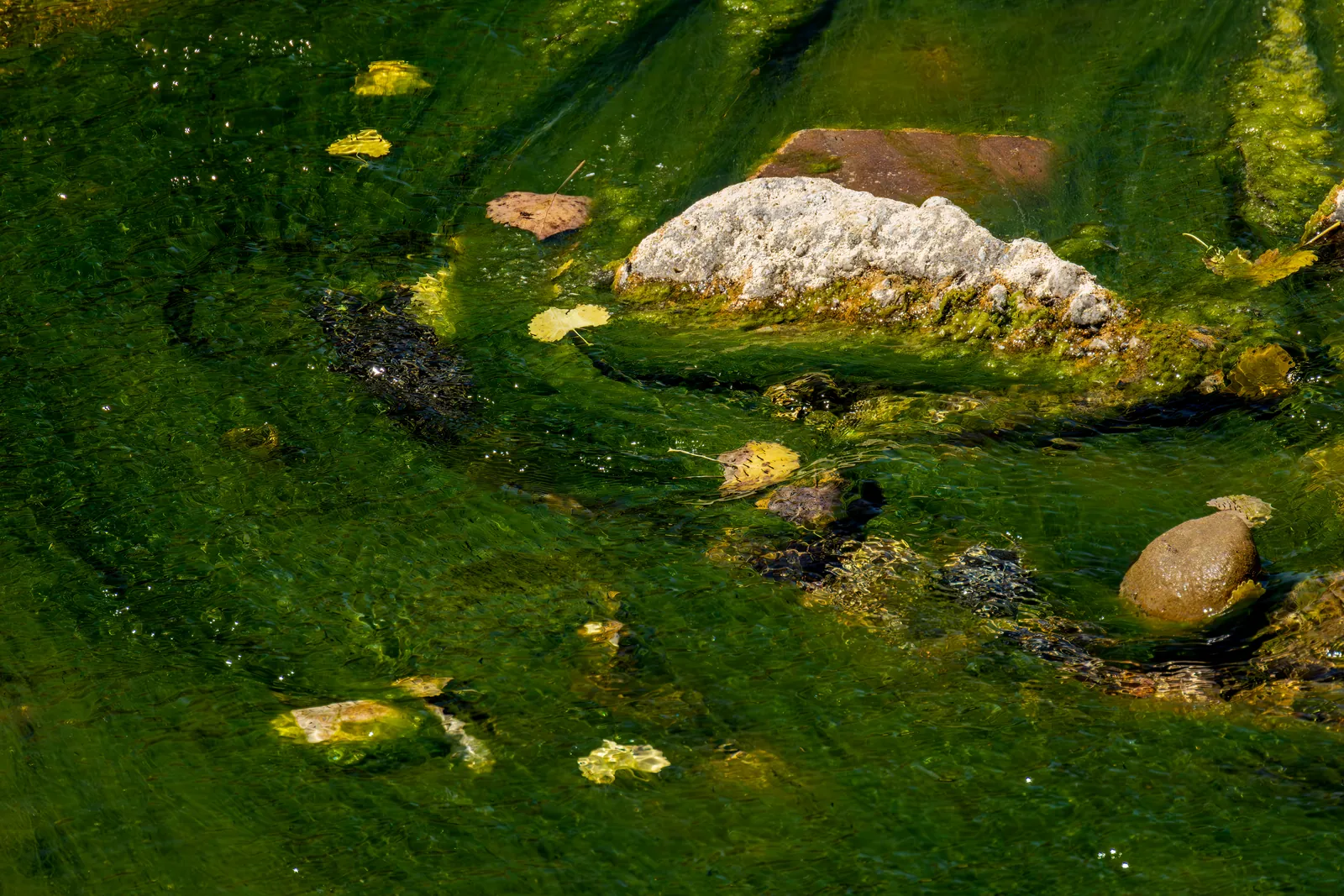
A water filter does not remove the toxins from a harmful algal bloom, and neither does boiling. The New Mexico Environment Department puts it in one sentence on its harmful algal bloom page, read September 17, 2026: “Do not ingest water from the bloom. Boiling, filtration and/or other treatments will not remove toxins.”
That is worth sitting with if you pump your water. Camping off a river rests on the idea that a filter makes bad water good. Against bacteria and protozoa, it does. Against a bloom it does nothing, because the problem is not an organism you can strain out. It is a dissolved chemical the algae released into the water.
Boiling is the worse instinct
Most people’s backup plan is heat. The CDC’s harmful algal bloom prevention page, read September 17, 2026, states that boiling water containing toxins will not make it safe to drink, that boiling does not remove toxins, and that it can concentrate the toxin.
Think about what boiling does. It removes water. The toxin stays. You end up with the same amount of poison in less liquid.
Municipal plants can handle this, which is where the confusion comes from. The EPA’s summary of cyanotoxin treatment says conventional water treatment, meaning coagulation, sedimentation, filtration and chlorination, “can generally remove cyanobacterial cells and low levels of toxins.” That is a treatment train in a building. It is not a squeeze filter on a water bladder.
This is live right now
On August 18, 2026 the BLM’s Taos Field Office notified the public of harmful algal blooms along sections of the Rio Grande inside Rio Grande del Norte National Monument. The announcement says BLM staff monitor for blooms weekly from the Colorado state line down to the Embudo area, that it is recommending increased caution along the Orilla Verde stretch, and that “updated safety notices are posted at river access points where additional care is advised.”
Blooms favor warm, low water. Late summer and early fall is their season, which is exactly when Southwest river corridors are pleasant to camp on.
The part nobody likes
You cannot test for this in the field, and a clear-looking stretch upstream of a bloom is no guarantee. So the honest answer is the unsatisfying one: when a waterbody is under a bloom advisory, carry your drinking water in.
Dogs are the bigger risk, and it is not close. They drink from the edge where scum collects, and they lick it off their coats afterward. New Mexico’s guidance is to supervise pets, keep them away from both the water and shoreline algae, and rinse them with clean water if they make contact.
What to do
Look before you pump. The CDC says to stay out of water that smells bad, looks discolored, or has foam, scum, mats of algae, or paint-like streaks on the surface, and out of water with dead fish washed up on the shore.
Then check whether the managing agency has posted anything. New Mexico runs a three-level system: a HAB WATCH means a bloom is developing, a HAB WARNING means measured values exceed the department’s thresholds, and a HAB DANGER means they greatly exceed them. Other states word it differently, so read the one that governs the water you are standing next to. The posted sign at the access point and the land manager’s current guidance beat any website, including this one.
Our water management guide covers the rest of the boondocking water problem, and the New Mexico free camping page covers the land you would be camping on while you sort it out.
Sources
- Harmful Algal Blooms (HABs), New Mexico Environment Department, Surface Water Quality Bureau
- Preventing Illnesses Caused by Harmful Algal Blooms, Centers for Disease Control and Prevention
- BLM Notifies Public of Harmful Algal Blooms within Rio Grande del Norte National Monument, BLM Taos Field Office, August 18, 2026
- Summary of Cyanotoxins Treatment in Drinking Water, US Environmental Protection Agency